What’s a Republic?

I have been poking around in The Federalist Papers recently. Written between October 1787 and August 1788, they are “a collection of 85 articles and essays written by Alexander Hamilton, James Madison, and John Jay promoting the ratification of the United States Constitution.” Fascinating stuff. (The complete collection is here at the Library of Congress.) Here’s a bit from James Madison, Federalist, no. 39, on the matter of what a republic is:

. . . we may define a republic to be, or at least may bestow that name on, a government which derives all its powers directly or indirectly from the great body of the people; and is administered by persons holding their offices during pleasure, for a limited period, or during good behaviour. It is essential to such a government, that it be derived from the great body of the society, not from an inconsiderable proportion, or a favored class of it; otherwise a handful of tyrannical nobles, exercising their oppressions by a delegation of their powers, might aspire to the rank of republicans, and claim for their government the honorable title of republic.

Let’s remember that this was written around 1788. That over 225 years ago!
Constitutions Matter in our Daily Lives

Regular readers of this blog know of my interest in constitutions and how they affect the prosperity, or lack thereof, of nations. A recent conversation with a friend prompted this line of thinking about constitutions and how they matter in our everyday life even though it may appear that constitutions are rather remote and cannot possibly be relevant in our lives.
Continue reading “Constitutions Matter in our Daily Lives”

Political Discrimination is Socially Harmful

Justice as Individual Fairness

Any conception of justice is about the relationship between the members of a society living in cooperative arrangements for the benefit of all members. For any society that is presumed to consist of free and equal persons, the necessary conditions for ensuring justice are equal personal and political liberties, and equal opportunities. Equality before the law is fair. That is, justice is about fairness, as the great political theorist John Rawls argued. He conceives of society “as a fair system of cooperation over time, from one generation to the next.”
Continue reading “Political Discrimination is Socially Harmful”

Republic Day Thoughts on Reading the Constitution

January 26th, 2015 is the 66th “Republic Day” of India: the Constitution of India came into force on this day in 1950 as the supreme law of the land, replacing the Government of India Act of 1935. I doubt that very many Indians actually know what the Republic Day has to do with the constitution. If you doubt that, ask a few Indians what’s celebrated.

To most, it is just a holiday with parades, patriotic songs and the same old politicians pontificating on television. Constitution? Well, we don’t worry about that. But we need to because the constitution matters. In a very strict sense, it is the most important institution that determines the fortunes of the state. It does so by constraining what laws politicians can enact, and therefore constrains public policies. Public policies matter in determining strongly national prosperity. A bad constitution guarantees a dysfunctional state. It’s time for people to read the constitution, understand it, and ponder whether it has lived up to its frequently advertised greatness.
Continue reading “Republic Day Thoughts on Reading the Constitution”

The Indian Constitution — Part 2

George Orwell claimed, “In a time of universal deceit – telling the truth is a revolutionary act.” By that measure, a commitment to telling the truth as one sees it must make one a bit of a revolutionary. Here I continue with my argument that the Indian constitution is the fountainhead of all of India’s troubles. Unless and until it is replaced, India will continue to languish at the bottom of the heap. That claim predictably makes people uncomfortable. In this series I aim to support argue for its truth. (Here is the first part.) In this part, I examine the importance of rules. Continue reading “The Indian Constitution — Part 2”

The Indian Constitution – Part 1

So far I have asked around 10,000 Indians if they have read the Indian Constitution. Not one of them admitted to having read it. A few say yes initially but when probed a bit admit that they haven’t really read the whole thing. Some claim to have read the preamble. That is like saying that they have seen the movie merely because they have seen the ad in the newspaper or have had lunch because they checked out the lunch menu.
Continue reading “The Indian Constitution – Part 1”

Republic Day Thoughts

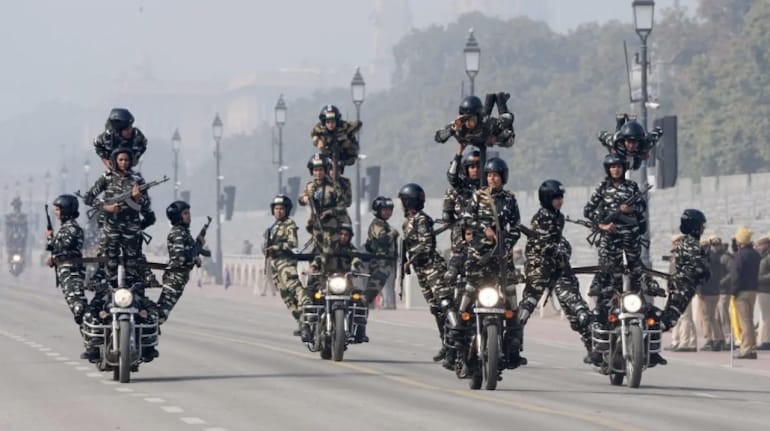
I can understand that India celebrates “Republic Day” — the day on which the Indian constitution came into force in 1950. I am not a huge big fan of the Indian constitution, as you may probably know. But what really bothers me is the ridiculous parade that they put up all over the country, the main sad event being in the capital New Delhi. That grown-ups would participate in something like this puzzles me at times, and then I remind myself that this is consistent with the general stupidity that blankets this place anyway. This ultimate dog and pony show’s absurdity is matched by the hysterical jingoism of the day.
Continue reading “Republic Day Thoughts”

On constitutions and the generality principle

This is the continuation of the previous piece on the government creating and profiting from conflict. This piece was originally published at Niti Central on Dec 3rd. Here it is, for the record. Continue reading “On constitutions and the generality principle”

The Indian Constitution was adopted on Nov 26th, 1949.

The wiki entry says, “The Constitution of India was adopted on 26 November 1949 and came into effect on 26 January 1950, proclaiming India to be a sovereign, democratic republic. It contained the founding principles of the law of the land which would govern India after its independence from British rule. On the day the constitution came into effect, India ceased to be a dominion of the British Crown. The Indian constitution is the world’s longest constitution. At the time of commencement, the constitution had 395 articles in 22 parts and 8 schedules. It consists of almost 80,000 words and took 2 years 11 months and 18 days to build.”

//platform.twitter.com/widgets.js

I have tried unsuccessfully to read the constitution. I could not understand it. Over the years I have asked thousands of educated Indians if they have read the Indian constitution and not one has claimed to have read it fully. A few have read parts of it, some only the preamble, and most have no idea what it is about except for that they know that it is the longest constitution in the world.
Continue reading “The Indian Constitution was adopted on Nov 26th, 1949.”

Buildings Don’t Matter, Intentions Do

calI. UC Berkeley

My alma mater, the University of California at Berkeley, is an extraordinary place. It consistently ranks among the top few universities in the world. The Academic Ranking of World Universities ranked it fourth overall—behind Harvard, Stanford and MIT. It ranks world’s second best in science, and third best in engineering, and in social sciences.
Continue reading “Buildings Don’t Matter, Intentions Do”