
 We are good. And only we, not the others, are good. The others are bad. Goodness is exclusively ours. That’s so evidently clear that it cannot but be perverse to deny that.
We are also uniquely qualified to point to our obvious goodness in contrast with the clear evilness of others. And when we do so, we use the inclusive “we” although we clearly want to exempt ourselves from the collective “we” we so eagerly employ to point to the faults of others. We say “we” but we don’t want to be associated with those we accuse of being bad. The “we” we refer to when we point our finger at the collective we is directed away from us. Continue reading “We Are Good”


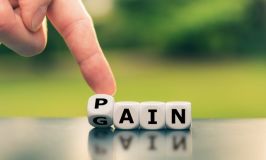 The adage “no pain, no gain” is broadly true with two main exceptions. One is that some people put in the pain but because of misguided effort (which is only evident ex post, not ex ante) or being simply unlucky, end up with no gain. The other being that some people put in little effort but with sheer good luck or cunning criminality end up with big gains. Unsuccessful entrepreneurs who are uncountably many belong in the first category, and politicians and gangsters (but I repeat myself) belong to the second.
 I am not against cryptocurrencies. In fact, I am all in favor of alternative currencies, private currencies, LETS, etc. I believe that people should have the freedom to choose what assets they want to hold, and what to use as a medium of exchange for their market transactions. But I have never been in favor of Bitcoin. I think it is a stupid ponzi scheme.
 The
The 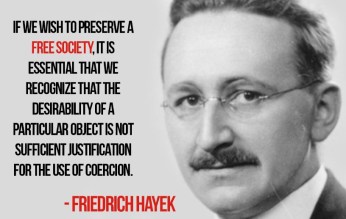 Friedrich August von Hayek was born 123 years ago on March 8th, 1899 in Vienna. His
  Happy Mother’s Day, all. May all beings be happy, may all beings be free of suffering, may all beings become enlightened.
 Atanu Dey : Life is a Random Draw