Hydrogen is Not Green

Namo Green Rail

Any sufficiently deep ignorance is indistinguishable from stupidity. You’d recognize that to be a riff on Arthur C. Clarke’s Third Law (1968) which states that “Any sufficiently advanced technology is indistinguishable from magic.”

While Clark’s 3rd law is about perception (how we perceive technology that we don’t understand), my variation is about outcomes: how severe ignorance results in outcomes that could have been motivated by malice or just plain stupidity. The intent may be to improve things but the impact is to make matters worse.

We all are abysmally ignorant about nearly everything. The saving grace is that our ignorance does not result in widespread socially destructive outcomes. But public policy is sadly replete with examples of gross stupidity arising out of ignorance. That’s so because bureaucrats and politicians are generally ignorant and therefore cannot formulate reasonable solutions to actual or perceived problems. Continue reading “Hydrogen is Not Green”

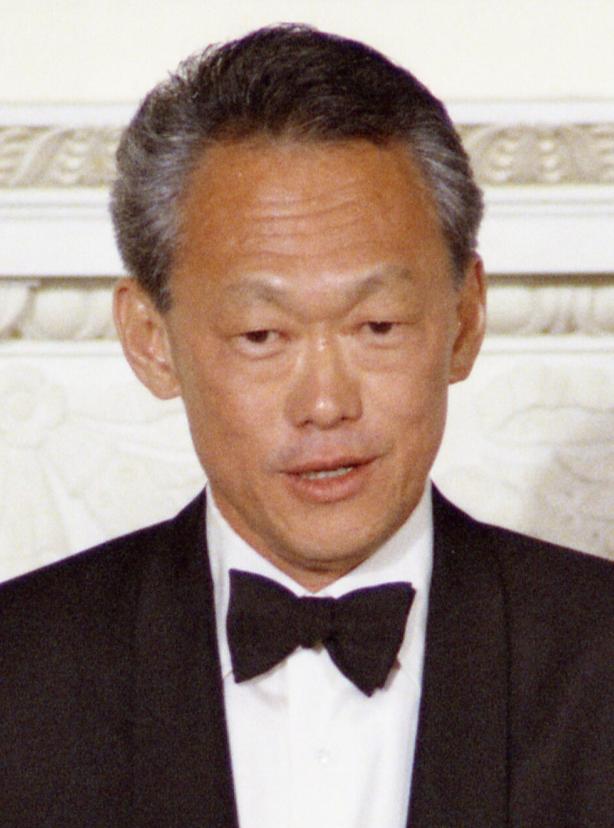
Lee Kuan Yew at the Kennedy School

Lee Kuan Yew in 1975

Lee Kuan Yew (1923 – 2015) was the 1st prime minister of Singapore from 1959 to 1990. In the very short list of public figures I admire, LKY stands at the very top.

Though he led a very tiny city-state (he liked to say that Singapore was only 224 square miles at low tide) his ideas had an impact on the world at large. He guided Deng Xiaoping formulate post-Mao China’s policies and therefore helped lift many hundreds of millions of people out of dire poverty.


I never get sentimental at the passing of public figures. In fact, I quietly celebrate the passing of most world leaders because they end up doing more harm than good. It comes naturally to me since I am a sworn enemy of the state. But I could not help becoming misty-eyed at LKY’s passing in March 2015.

Nobody is perfect but LKY was the least flawed of them all. He had the wisdom of a Confucian master, the grasp of realpolitik of a Machiavelli, the knowledge of history of a Gibbon, the understanding of economics of a Ricardo. I could go on but I am not skilled enough to express how much I admire LKY. Continue reading “Lee Kuan Yew at the Kennedy School”

Happy 250th

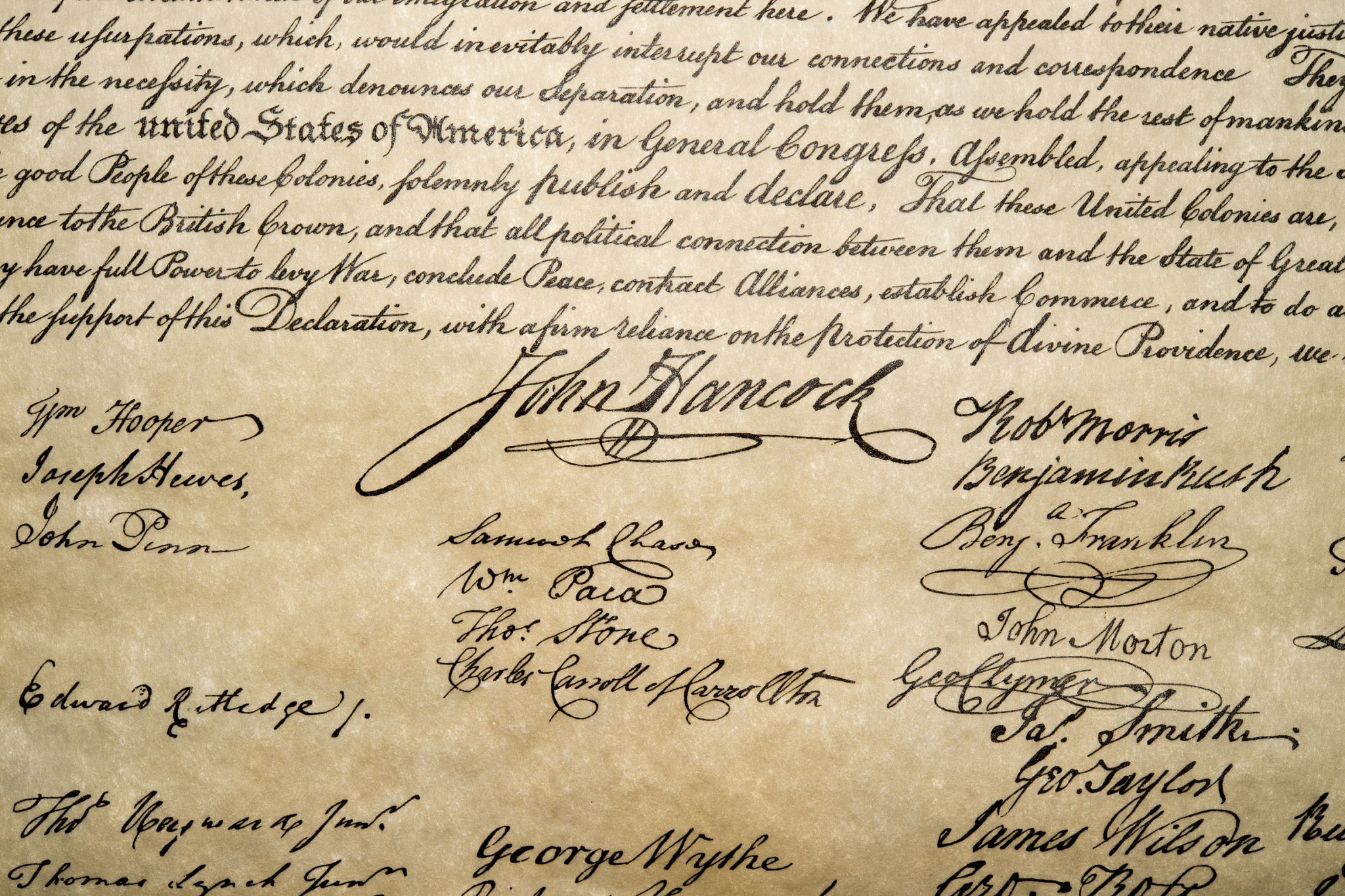
Declaration of independence 4th July 1776

4th of July 2026 marks the 250 anniversary of the day Congress approved the text of the Declaration of Independence, and therefore the birth of the United States of America.

The Declaration was signed by 56 patriots. By putting their names on that parchment, they were committing what King George III and British law defined as high treason—a crime traditionally punished by being hanged, drawn, and quartered. In effect they were signing their own death warrants.

They risked their wealth, their families, and their lives on a military gamble. If George Washington’s army had failed, those 56 names would have served as an official British execution list.

The handwritten parchment wasn’t actually signed until August 2, 1776. Even then, not everyone was present; delegates continued to add their names over the coming months. The final signer, Thomas McKean, didn’t sign his name until 1777. Continue reading “Happy 250th”

Large Numbers

The word trillionaire has been in the news since SpaceX’s IPO a few weeks ago. I have no idea what it feels like being a trillionaire (and I bet neither do you.) A net worth of a trillion dollars is several orders of magnitude above mine and yours.

Besides, I have a hard time dealing with large numbers.

Large numbers are unnatural. Understanding them is not part of our cognitive endowment. We don’t have an instinctive feel for them. We have to develop the skill needed to do arithmetic using them. The legendary Stanford computer and cognitive scientist John McCarthy (1927 -2011), the man who coined the term artificial intelligence, had in his email signature the line, “He who refuses to do arithmetic is doomed to talk nonsense.”

Economists, my tribe, have to do arithmetic and algebra if we are committed to not talking nonsense. Arithmetic and algebra are unnatural. Without instructions, we are totally incapable of learning them.

Speaking and comprehending language comes naturally to us. As does bipedal locomotion. Nor do we need to learn the physics of ballistics to be able to throw and catch a ball. But we have to be taught to learn reading and writing because those two are as unnatural as arithmetic and algebra. Continue reading “Large Numbers”