
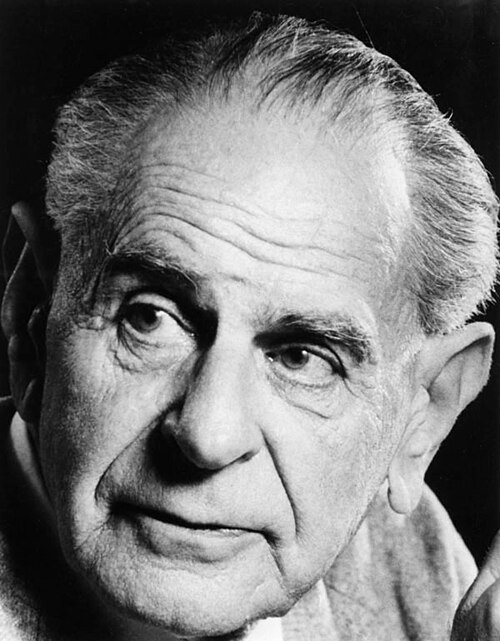
David Deutsch is an awesome thinker. His day job is that of a physicist involved in cosmology and quantum physics. He is considered the “father of quantum computing.” Quantum mechanics is far above my IQ level; I couldn’t possibly understand it. Quantum computation too is beyond my reach.
Deutsch is a genuine genius. What was previously called the “Church-Turing thesis” is now called “Church-Turing-Deutsch thesis.”[1]
Deutsch is a proponent of the “many-world interpretation” of QM proposed by Hugh Everett. For an accessible introduction to MWI I recommend the article on “Many-Worlds Interpretation of Quantum Mechanics” in the Stanford Encyclopedia of Philosophy.
Being a physicist is Deutsch’s day job, as I mentioned before. He moonlights as a deep thinker on other important matters. In an interview on economist Tyler Cowen’s podcast, Tyler characterized Deutsch as the first and only “philosopher of freedom.” I will provide a link to it later.
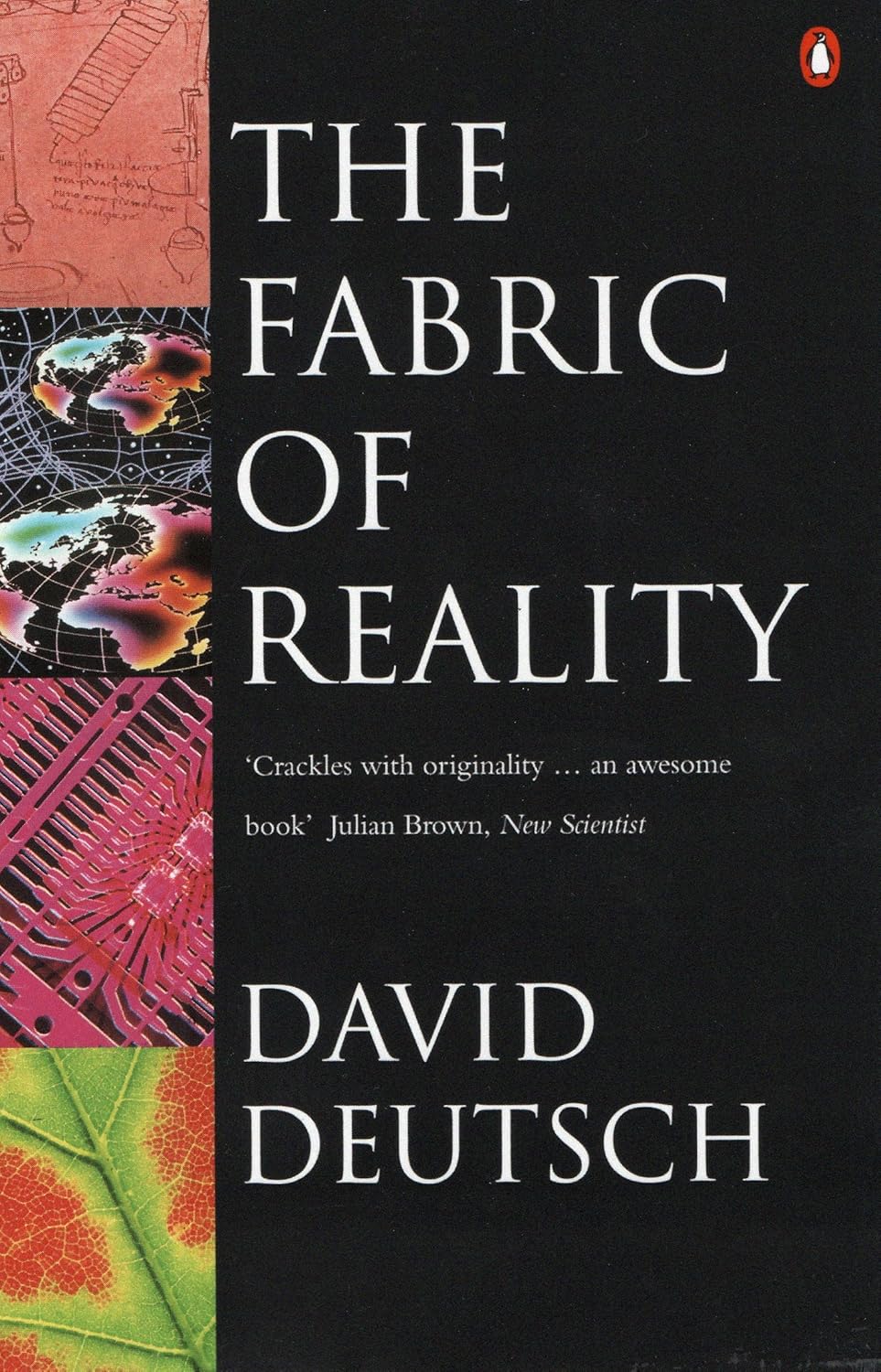 Deutsch has written two books for the general public. The Fabric of Reality and The Beginning of Infinity. They are brilliant. I have them handy on my phone.
I have the brains to understand the ideas in those books but some of them require a great deal of brain cycles and repeated readings. Those two books leave me elated and depressed. Elated that I belong to the same species as Deutsch, and depressed that I (like say 99.999999% of all people) am not as smart as he is.
Why am I going on about David Deutsch but the title of this post is Karl Popper? The reason is that Deutsch cannot go even five minutes in any conversation without referring to Popper. That persuaded me to really understand Popper’s ideas.
I think every educated person (I assume the readers of this blog are educated) should be familiar with the basic ideas of Popper. Who was Popper?
Sir Karl Raimund Popper (1902–1994) was one of the most influential philosophers of the 20th century, best known for his contributions to the philosophy of science, epistemology, and political philosophy. I have an abiding interest in those subjects. (As many of you know, I consider myself to be an Austrian economist.)
Popper was born in Vienna, Austria, to a non-practicing Jewish family. He studied mathematics, physics, and philosophy at the University of Vienna. He worked briefly as a schoolteacher and was associated with the Vienna Circle (logical positivists) but became a sharp critic of their views. With the rise of Nazism, he moved to New Zealand during World War II, then settled in Britain, where he taught at the London School of Economics (LSE) from 1949 until his retirement.
Popper’s most famous idea is falsifiability as the demarcation criterion between science and non-science: A theory is scientific if it makes risky, testable predictions that could, in principle, be proven false by observation or experiment.
Popper pointed out that science progresses not by confirming theories (as the positivists and inductivists claimed), but by conjectures and refutations: scientists propose bold hypotheses and then try aggressively to falsify them.
Theories that cannot be falsified are not scientific, even if they seem to explain everything. That’s pseudoscience. This view is laid out in his major work: The Logic of Scientific Discovery (Logik der Forschung, 1934; English edition 1959).
Popper rejected induction as a foundation of science. This is big idea. Induction is logically invalid as a means to gaining knowledge. He emphasized critical rationalism: criticism, not justification. Popper insisted that knowledge grows through conjecture and criticism, and that progress in the sciences requires intellectual humility.
Popper is famous for his brilliant defense of liberal democracy and open societies.
In his 1945 book, The Open Society and Its Enemies, he fiercely criticizes totalitarianism and historicism (the idea that history follows inevitable laws). He attacks Plato (for his ideal authoritarian state), Hegel, and Marx as intellectual sources of closed societies and tyranny. This book, written during WWII, became highly influential during the Cold War as an intellectual defense of Western liberal democracies.
Popper was against utopian revolutionary planning. He advocated piecemeal, gradual, testable social reforms.
He is widely regarded as one of the greatest philosophers of science of all time. His ideas influenced scientists like Einstein (who was one of his heroes), economists (like Friedrich Hayek, his friend), and politicians.
Criticisms of his work include debates over whether falsification is truly how science works (Thomas Kuhn, Imre Lakatos, and others offered alternatives or refinements) and whether his political philosophy was always fair to Plato or Marx.
Knighted in 1965; died in London in 1994 at age 92.
NOTES
[1] I know the Church-Turing thesis from my computer science days. It posits that every function that can be computed by a Turing machine can also be computed by a universal Turing machine. The thesis is a cornerstone of computability theory: that all computable functions are equivalent in their computational capabilities.
David Deutsch extended that thesis. He proposed that a universal quantum computer could simulate any physical system, thus extending the reach of computability beyond classical models. This has led to the development of quantum computing and the possibility of simulating complex physical processes through quantum means.


