
Today is the electron’s birthday. In 1874, Irish physicist George Johnstone Stoney suggested that there existed a “single definite quantity of electricity,” the charge of a monovalent ion. But that was a conjecture. He named the particle an electron.
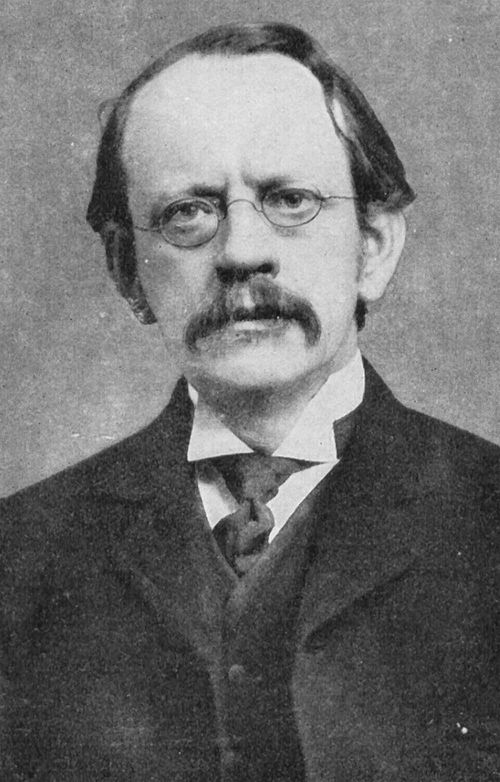
On April 30, 1887 at the Royal Institution, British physicist J. J. Thomson (1856 – 1940) announced the discovery of a particle that is over 1,800 times lighter than a proton. Using a cathode ray tube he found the cathode rays bent in electric and magnetic fields thus showing that they were made of tiny, negatively charged particles were electrons, much smaller than atoms.
As it happened, Thomson’s son, George Paget Thomson (1892 – 1975), experimentally demonstrated electron diffraction in 1927 thus confirming Louis de Broglie’s theory that particles also behave like waves. George Thomson was awarded the Nobel prize in physics in 1937. The father showed that electrons are particles, and the son showed that electrons were waves. Continue reading “Happy Birthday, Electron & WWW”

