How Long is a Meter?

At a restaurant in Dallas, TX. I like it that Texans wear hats indoors, too.

How long is the platinum-iridium bar that served as the world’s SI based unit of length, the meter, from 1889 to 1960? It was held at 0 degrees Celsius at the International Bureau of Weights and Measures near Paris, France. That platinum-iridium bar is now preserved as an artifact at the bureau near Paris, France.

About it, in Philosophical Investigations §50, Ludwig Wittgenstein wrote: “There is one thing of which one can say neither that it is one metre long, nor that it is not one metre long, and that is the standard metre in Paris. But this is, of course, not to ascribe any extraordinary property to it, but only to mark its peculiar role in the language-game of measuring with a metre-rule.”

Wittgenstein’s remark relates to the grammatical game we play when we measure something. The bar in Paris was not an object we discovered to be exactly one meter long. It was the thing that gave meaning to “one meter long” to begin with. The question of how long that bar is cannot be answered by measurement. The bar simply occupies the role of a paradigm or a sample. Continue reading “How Long is a Meter?”

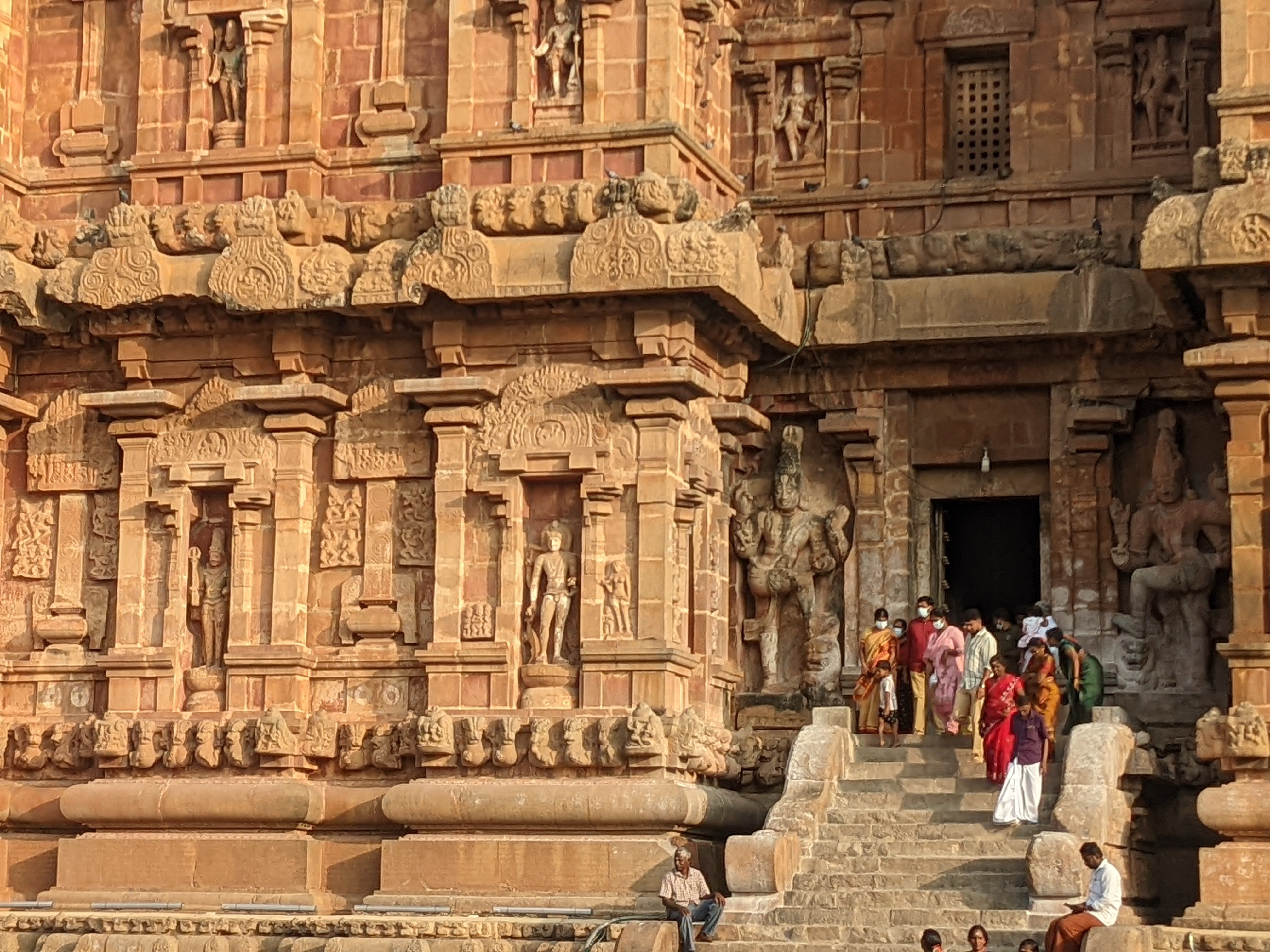
Alan Watts on the Bhagavad Gita

Margaret Thatcher remarked that Europe was the product of history. European nations were shaped by centuries of wars, dynasties, traditions, and cultural evolution, their identity deeply rooted in historical continuity.

By contrast, the United States was consciously built on philosophy: Enlightenment ideals of liberty and individual rights. Its founding documents—the Declaration of Independence and the Constitution—embody abstract principles rather than inherited traditions.

Europe grew organically from its past, while the United States was deliberately constructed around ideas, making it a nation defined more by philosophy than by historical legacy. An analogous story can be told about the religions and the dharmas. The dharmas are a product of philosophy, not history. Continue reading “Alan Watts on the Bhagavad Gita”

Bitcoin, the Brilliant Ponzi Scheme

Ponzi schemes are an unfortunate fact of modern life.

Named after Charles Ponzi, an Italian immigrant who ran a famous scam in the 1920s, a Ponzi scheme is a fraudulent investment scam where returns to earlier investors are paid using funds from new investors, rather than from legitimate profits generated by any underlying business activity or asset appreciation.

These schemes rely on a constant flow of fresh money to keep going. Eventually, when new investors dry up or too many people try to withdraw funds, the scheme collapses, leaving most participants with heavy losses. (See grok for more.)

Like many others, I am convinced that bitcoin is the greatest Ponzi scheme of the 21st century CE. It has no underlying productive activity and it needs a constant flow of fresh money from “bigger fools” to keep going. Continue reading “Bitcoin, the Brilliant Ponzi Scheme”

Iran

I’ve never been to Iran. I would have liked to have visited Iran but that was before the mullahs took over.

One of my close friends during my undergrad engineering days in Nagpur was an Iranian named Ibrahim Akbar Shahi from Isfahan. After he finished his engineering degree, he and his Iranian girlfriend continued to stay on in India in Pune. I lost touch with him when I went to the US for my PhD studies at Rutgers University.

I remember one of Ibrahim’s observations. He said that he found Indian Muslims to be rabid and disgustingly intolerant. He was a Muslim of course as most Iranians were, but he said that Iranians were relaxed about their faith. Then the Ayatollahs took over. Continue reading “Iran”

Contemplating Investing

I recently came across a quote on the web that “many of the best investors in the world are really good at doing nothing for long periods of time.”

Doing nothing for long periods of time comes naturally to me. I am definitely not a lazy thinker but when it comes to doing, I am content to avoid any action until it becomes unavoidable. Laziness is an art form. 

I have always been in favor of idleness. See my post from January 2019, In Praise of Idleness, which begins —

It makes good sense for the slave master to persuade his slaves that idleness is a sin and he’s doing god’s work when he flogs the slaves to work harder. The harder the slaves work, the more the master can take for himself. But of course the real motive has to be concealed and clothed in moral raiment.

“Work hard, you b*tches, and stop complaining.” That’s what Mohandas Gandhi meant but put it so very piously by saying, “Purity of mind and idleness are incompatible.” See what I mean? Continue reading “Contemplating Investing”