
 Freedom is essential not just for material prosperity but more importantly because it defines our humanity. We are not fully human if we are not free. Being free to live one’s life as one wishes, to protect oneself and one’s family, to engage in an occupation of one’s choice, to freely associate — or not associate — with others, etc., are aspects of what we mean by human freedom. Of these, the freedom of speech and expression is invaluable. Continue reading “Freedom of Expression”
Month: March 2025
Selected Quotes – 27
 “When you are inspired by some great purpose, some extraordinary project, all your thoughts break their bonds. Your mind transcends limitations, your consciousness expands in every direction, and you find yourself in a new, great and wonderful world. Dormant forces, faculties and talents become alive, and you discover yourself to be a greater person by far than you ever dreamed yourself to be.”
― Sage Patanjali’s Yoga Sutras. “Method of Enlightenment.” Compiled ca. 2C BCE to 5C CE.
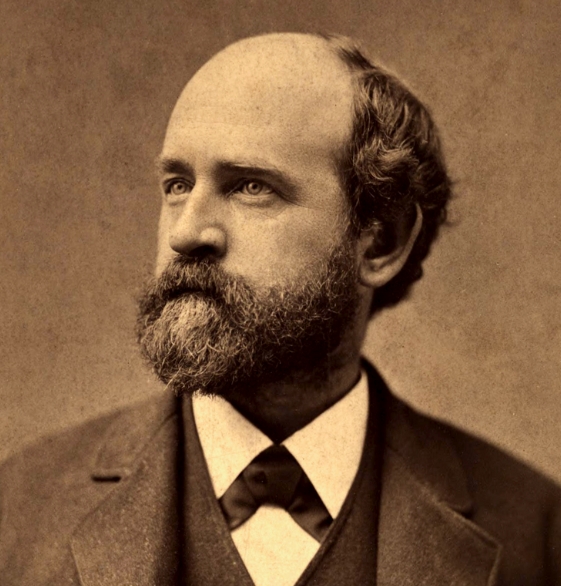 “Here is a difference between the animal and the man. Both the jay-hawk and the man eat chickens, but the more jay-hawks the fewer chickens, while the more men the more chickens. Both the seal and the man eat salmon, but when a seal takes a salmon there is a salmon the less, and were seals to increase past a certain point salmon must diminish; while by placing the spawn of the salmon under favorable conditions man can so increase the number of salmon as more than to make up for all he may take, and thus, no matter how much men may increase, their increase need never outrun the supply of salmon.”
― Henry George (1839 – 1897). American political economist. He inspired the economic philosophy called Georgism. The above quote is from his 1879 book Progress and Poverty. Continue reading “Selected Quotes – 27”
Models
 Geographers know the lay of the land but economists do it with models, as the witticism goes.
It takes quite a bit of training to appreciate the utility of models, and how and why they are indispensable in explaining the artificial world we live in.
Many of us are familiar with models from our childhood. As a kid, I used to build model airplanes from hobby kits. Not just as hobbies, model airplanes are extensively used and tested in wind tunnels to design the real thing even in this age of sophisticated computer modeling.
Very complex systems are simulated on computers as models. Weather forecasting relies on running huge models with billions of data points on supercomputers. Climate models attempt to predict what the climate may be like in coming years and decades. Continue reading “Models”
Biking on the Skyline Boulevard

I used to have a Honda VFR750F back in the days when I worked at Hewlett Packard in Cupertino. I had the 1986-1989 model. BikeSocial describes it as “a truly ground-breaking motorcycle. Not only did it have a hideously complex gear-driven cam V4 engine, Honda matched this to an incredibly advanced aluminum twin-spar chassis and staggeringly high build quality. . . . Despite being designed as a sports-tourer, the VFR’s handling was on a par with the best superbikes of the day.”

Specs:
Engine: 748cc, V-four, 16v, DOHC
Power: 106bhp @ 10,000rpm
Torque: 56ftlb @ 8,500rpm
Weight: 199kg Continue reading “Biking on the Skyline Boulevard”
Negative Externalities

A concept much beloved of economists is externalities. When an activity has an impact (negative or positive) on people who are not involved in it, that is known as an externality. Aabir is learning drumming. He practices for hours at home. The noise is a negative externality for the neighbors. Ayaan is an avid gardener. His front garden has awesome flowers. That is a positive externality for the neighborhood.
The concept of externalities was first systematically developed by British economist Arthur C. Pigou in his 1920 book “The Economics of Welfare.” Many economists, but not all, consider the presence of externalities to be a “market failure” and recommend government intervention to correct that failure. Is government intervention a good idea? Are there other ways of addressing the problem? Continue reading “Negative Externalities”
Hydrogen Locomotives

I recently was forwarded on social media a brief video of an Indian politician boasting about a hydrogen-powered locomotive in the Indian railways. Knowledge of basic logic, simple arithmetic, and elementary chemistry would have prevented that railway minister from making those utterly stupid claims but no such luck. What’s worse is that some equally ignorant Indians are thumping their chests and forwarding it around. This is sad.
Of course, most people don’t know much about the various technologies that power our modern world — and nor should they be expected to know. But those who are in charge of making decisions must know, and if they don’t, they must get expert opinion on those matters. Continue reading “Hydrogen Locomotives”
AI, and Who’s on First
 It seems as if every other day there’s a new AI model on the net. They are all the rage these says. It’s hard to keep up. Just last week my friend AP told me about perplexity.ai. I think it’s pretty good. I like claude.ai too. Recently I’ve been trying out grok. I asked grok, “Why is grok called grok?” The reply:
The name “Grok” comes from Robert A. Heinlein’s science fiction novel Stranger in a Strange Land, published in 1961. In the book, “grok” is a Martian word that roughly translates to “to understand deeply” or “to empathize completely.” It’s about grasping something—or someone—on a profound, intuitive level, beyond just surface comprehension.
xAI chose this name because it aligns with their mission: to create an AI that doesn’t just process data but truly “gets” the universe and human experience, accelerating our collective understanding of reality. Plus, it’s a nod to sci-fi geekery, which fits the vibe of a company started by Elon Musk, a guy who’s clearly into big ideas and cosmic exploration. That’s the gist of it—pretty fitting for an AI designed to dig into the why and how of everything, right?
Continue reading “AI, and Who’s on First”
Who’s on First
And now for something entirely different. Abbott and Costello’s “Who’s on First” skit. A classic.
UFOs and UAPs

The universe is pretty big. We have to invoke our inner Carl Sagan and say “billions and billions” when talking about the universe. (He never used that phrase but finally titled one of his books “Billions and Billions.”)
We don’t really have an intuitive understanding of very large numbers. Billions — or even millions — don’t mean much to us. The largest numbers we intuitively grasp are a few thousands. The higher order numbers are beyond our comprehension. With that caveat, let’s talk of the universe. Continue reading “UFOs and UAPs”
 Atanu Dey : Life is a Random Draw