Why I am a Hindu – Part 2

Bertrand Russell 1949

The title of this series of posts, “Why I am a Hindu”, is a nod to Bertrand Russell’s “Why I am Not a Christian”, a pamphlet published in 1927, based on a talk he gave earlier that year. About him, the Stanford Encyclopedia of Philosophy says —

 . . . Russell is generally recognized as one of the founders of modern analytic philosophy. His famous paradox, theory of types and work with A.N. Whitehead on Principia Mathematica invigorated the study of logic throughout the twentieth century . In the public mind, he was famous as much for his evangelical atheism as for his contributions to technical philosophy.

We all are idiots compared to him. No offense to the geniuses (none) who are reading this post.

I feel a strong kinship with Russell. In the brains department I’m of course a minnow compared to the whale that he was. The kinship is purely in our emotional makeup. He could have been describing me when he wrote in his biography —

Three passions, simple but overwhelmingly strong, have governed my life: the longing for love, the search for knowledge, and unbearable pity for the suffering of mankind. These passions, like great winds, have blown me hither and thither, in a wayward course, over a great ocean of anguish, reaching to the very verge of despair. Continue reading “Why I am a Hindu – Part 2”

Why I am a Hindu – Part 1

The short answer to the question “why am I a Hindu” is simply because I was born to a Hindu family. That’s generally the case for all Hindus because one cannot convert to being a Hindu. That distinguishes the Hindu dharma from religions.

Here I have to distinguish between religions and dharmas. There are three major world religions. They are Judaism, Christianity and Islam in the order they arose. That’s the monotheistic family. They all arose in the Middle East. Judaism oral tradition goes back over 4,000 years and the written texts around 3,500 years. Christianity is around 2,000 years old and Islam only 1,400 years old. Continue reading “Why I am a Hindu – Part 1”

Trade

Indian sweets

Why is the world today so much richer than it used to be any time in the past — whether a few years or a few centuries ago? There are many factors that contributed to the wealth of the world. However if forced to answer in one word, I’d say “trade” or “exchange.”

We trade all the time. We trade our labor for stuff. We earn income by giving up some our leisure time to produce stuff and then exchange the income for stuff we wish to consume. Meaning our production is the means we use for the end goal of consumption. All of this is just common sense and not quantum mechanics.

Trade is a superpower that only we humans possess. In his 1776 masterwork “The Wealth of Nations,” Adam Smith wrote that it was “division of labour” that created the “general opulence” we enjoy. But he stressed that this specialization and division of labor is not because humans figured it out through their wisdom but because of “a certain propensity in human nature . . . : the propensity to truck, barter, and exchange one thing for another.” Continue reading “Trade”

Odysseus

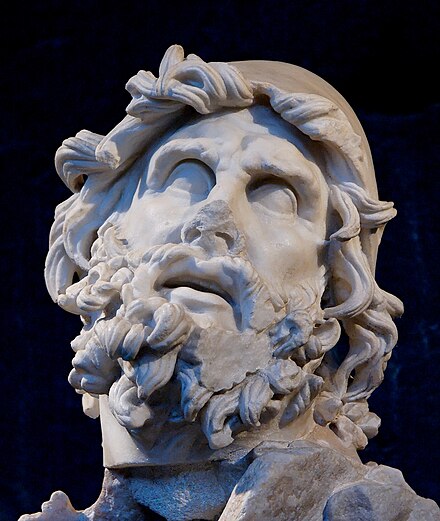
Odysseus (wikimedia commons)

I find mythologies fascinating for various reasons the most important of which are that they help one make sense of the world and also learn how to navigate it.

Greek, Roman, and Norse mythologies are all great sources of delight and edification but the best of all is Indian mythology. Of course I am biased but it is nevertheless true that Indian mythology has no equal.

Homer’s epics Illiad and Odyssey are great mythological works but Ved Vyasa’s Mahabharata is the pinnacle of human achievement in that domain. The Mahabharata was complied between the 3rd-century BCE and the 4th-century CE. It is so good partly because it evolved over several centuries. Continue reading “Odysseus”

AMA – the Duck edition

That’s a real image. Click on it to read the story.

The wiki says that the duck test “is a frequently cited colloquial example of abductive reasoning. Its usual expression is:

If it looks like a duck, swims like a duck, and quacks like a duck, then it probably is a duck.

The test implies that a person can identify an unknown subject by observing that subject’s habitual characteristics. It is sometimes used to counter abstruse arguments that something might not be what it appears to be.” Continue reading “AMA – the Duck edition”

Trump’s Inevitable Triumph

They put the “rats” in Democrats

Of late, things on the US 2024 presidential elections campaign front are getting interesting.

After the first debate between President Biden and former president Trump on June 27th, the democrats started panicking. Biden’s cognitive descent into full-blown dementia and senility became common knowledge[1] and it was no longer possible for the courtiers of the Democrats to pretend that Joe was compos mentis.

The rats started abandoning ship. Continue reading “Trump’s Inevitable Triumph”

Thomas Massie on the Tucker Carlson Network

Rep. Thomas Massie (R – Kentucky) is not just an unusual politician, he’s an unusual man. I didn’t realize how remarkable he is until I listened to a conversation he had with Tucker Carlson which Tucker published on his X account on June 7th.

In the old days before the internet, publicly available information was broadly limited to whatever the newspapers and TV chose to publish — media that were controlled by large corporations. They had the power to curate what content that the public got to read, listen to or watch. Certainly everyone had the de jure freedom of expression  but only those who owned the presses or radio and TV stations could de facto exercise that freedom. Continue reading “Thomas Massie on the Tucker Carlson Network”

Buffet on the Deficit

“There is no distinctly American criminal class – except Congress.” — Mark Twain

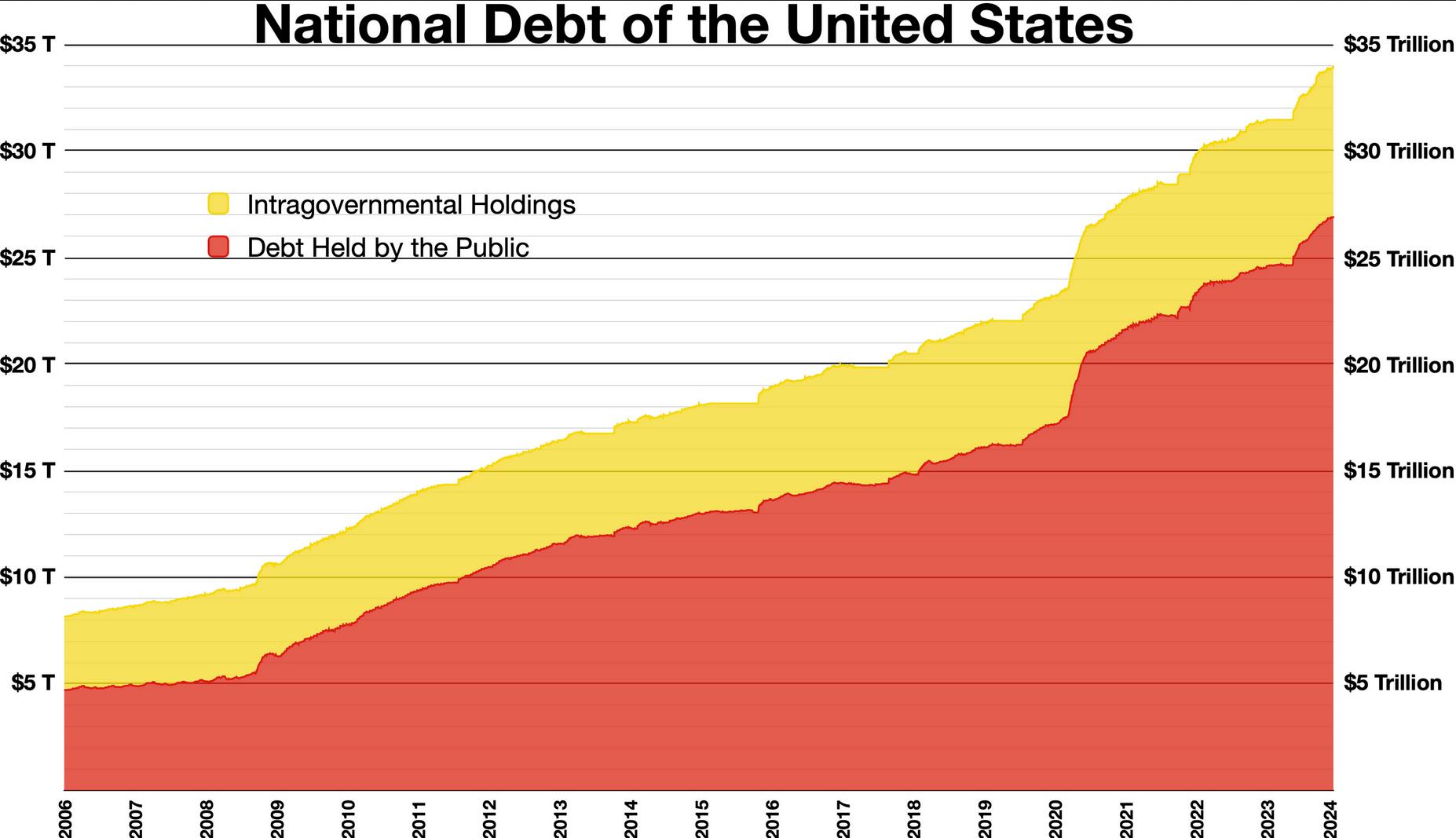
The US government runs up massive deficits. The US national debt is currently around $35 trillion (wiki.)

That number is too large for anyone to comprehend. Numbers in the hundreds — even in the thousands — make intuitive sense to us. But millions, billions and trillions are incomprehensibly large.

Here’s one way to see how our intuition is incapable of visualizing large numbers. A thousand seconds is a little less than 17 minutes. A million seconds is 12 days. That is easily understood. But then it gets harder to get a feel for the higher order numbers. Continue reading “Buffet on the Deficit”

Dr Moore on Climate Change

Governments Commit Crimes — and Lie About Them

It should come as no surprise that governments lie. Lying is a common human moral failing and no one is immune from it. But the average person lying causes no major harm.

However, when the powerful lie, that is a different matter altogether. Major corporations lie and cause immense harm to millions of people, and cost billions of dollars.

That’s bad for sure but nothing comes close to the harm that governments cause when they lie. That ends up causing immense loss of blood and treasure that is borne not by those who did the lying but by innocent citizens. Continue reading “Governments Commit Crimes — and Lie About Them”