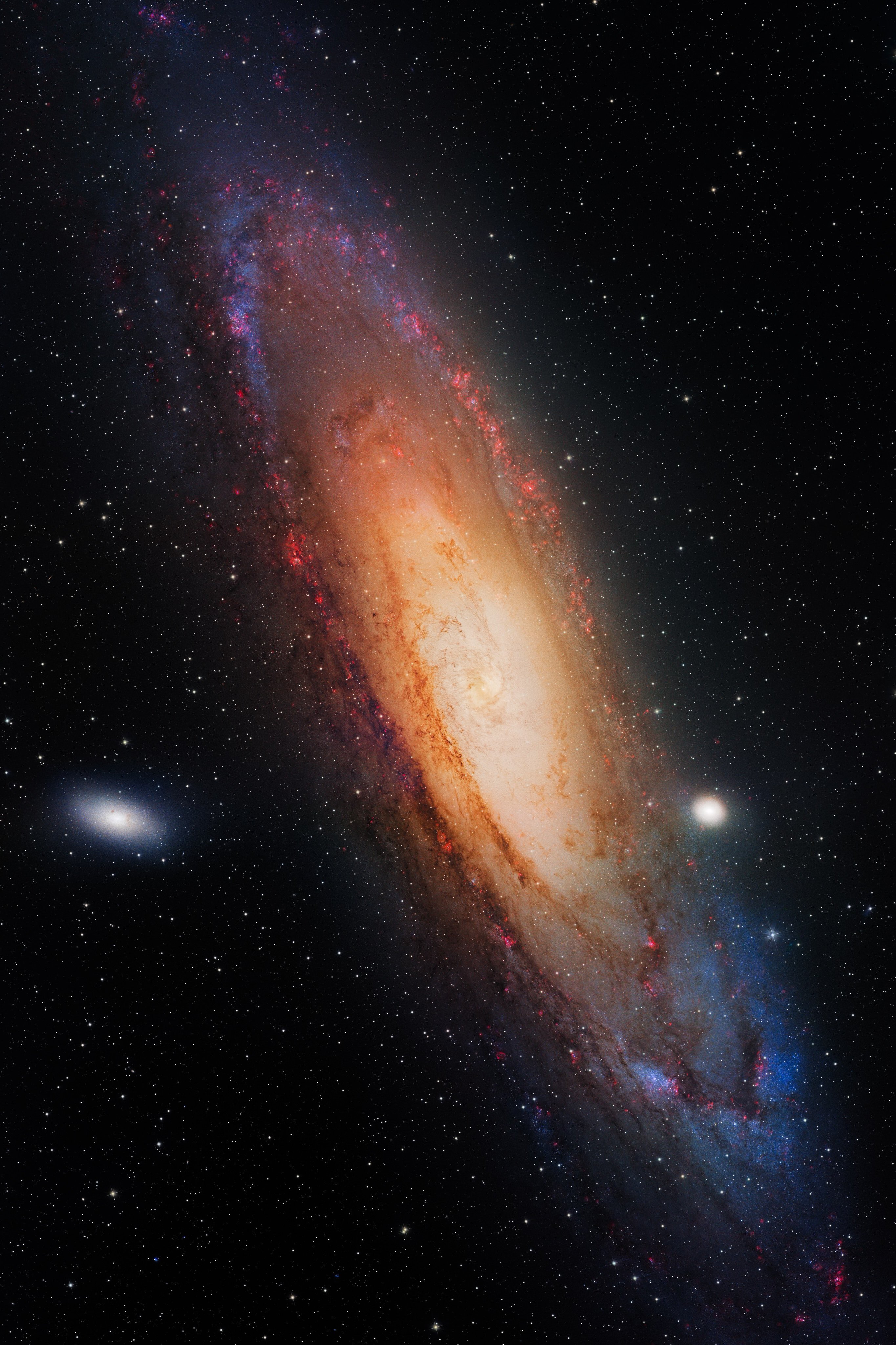
Our Moon

Since time immemorial, we humans have looked up and wondered at the moon, earth’s only natural satellite. We continue to be captivated by the beauty of the moon and the 28-day cycle of waxing and waning. Not just that, the moon has played a crucial role in shaping our planet’s evolution and the development of life itself.

Modern scientific theories explain the origin of the moon and its impact on life on earth. Indeed the moon began with an impact, an interplanetary impact. The leading theory is the Giant Impact Hypothesis. According to that, about 4.5 billion years ago, a Mars-sized protoplanet called Theia collided with the earth. This massive impact ejected a vast amount of debris into space, consisting of material from both earth and the impactor. This debris coalesced due to mutual gravitational attraction over time, forming our moon. This explains several key observations, including the similarity between moon rocks and earth’s mantle composition, and why the moon is relatively large compared to earth. Continue reading “Our Moon”

Krugman Retiring from NYTimes

All things must pass. Paul Krugman is going to retire from being a NY Times columnist after 25 years. Some people claim that being a columnist helped him get the 2008 Nobel Memorial prize in the economic sciences.

I can’t say anything about his NYT columns. I am  not a subscriber. I did catch glimpses of his political position, though. He was totally sold out to the Democratic party. Over the years, he’s infamously made a bunch of poor predictions. I was surprised at his mistakes considering that he was a first-rate economist.

I say “was” because he appeared to have forgotten the economics lessons that he learned and taught to a couple of generations of students — including yours truly. Continue reading “Krugman Retiring from NYTimes”

Why I’m a Hindu – Part 5

I’m happy to learn about my dharma — the Sanatan dharma — from all manner of sources: teachers, books, talks, videos and friends.

The dharma is vast and inexhaustible. No point in attempting to understand it to any significant degree. One cannot drink all the waters of all the rivers and lakes of the world. Don’t even try. Take a drink as and when thirsty, and get on with other things.

I like Dr Nick Sutton’s talks on Hinduism. He is at the Oxford Centre for Hindu Studies. I’m not sure but I believe he is a practicing Hindu. Be that as it may, he sure enjoys his scholarship. Continue reading “Why I’m a Hindu – Part 5”

Big Government Rocks – Part 2

The graphic above is amazing. Not too long ago, a mere eight generations or 200 years, over 90 percent of all people lived in extreme poverty. That of course means that nearly all humans that have ever lived before that lived in unimaginable poverty. None of the ancestors of the billions living today enjoyed any wealth. Even the wealthiest of the past were poor compared to the average person today.

Why and how this transformation happened is a fascinating question that occupies most of my attention. This is how I understand the matter.

Now I will continue from part 1 of this series. Continue reading “Big Government Rocks – Part 2”

Big Government Rocks – Part 1

The proposition that big government gets things done — and the corollary that the bigger the government the better it gets — is one of those propositions that sound better the less one thinks about it. But it falls apart under even the slightest load of analytical and empirical examination. Best not to think too deeply about it if one wants to maintain that misconception.

In a recent post (Javier Milei at the UN) I had heaped praise on Argentina’s Javier Milei for cutting his government. Argentina’s economy was in shambles because of insane socialist (but I repeat myself) policies. I won’t go into the details of the absolute disastrous path that Argentina was accelerating on; you can look it up at your leisure. Milei upon assuming office began to put on the brakes and with some luck, will put his nation on the road to recovery. Continue reading “Big Government Rocks – Part 1”

Dept of Government Efficiency

Dept of Govt Efficiency — click for the wiki page

Things have been moving fast since Trump won the Nov 5th US Presidential election. Trump has announced a few of his nominations for top executive position. I am most excited about Tulsi Gabbard’s nomination as the director of national intelligence — a position that oversees intelligence agencies like the CIA, FBI and the National Security Agency (NSA).

Elon Musk and Vivek Ramaswamy have been made jointly in charge of a “Department of Government Efficiency” (DOGE). That department is not part of the federal government, and the two will work pro bono. DOGE will only provide advice; various agencies of the federal government may choose to follow the advice or not, as directed by the head of the executive branch, the president of the US. Continue reading “Dept of Government Efficiency”

Javier Milei at the UN

“The welfare State is a lie and the idea that the State generates wealth is also a lie. The State generates nothing; the State only destroys wealth and all it does is steal it from others to distribute it among friends.” — Javier Gerardo Milei.

President Javier Milei of Argentina, speaking during the General Debate at the 79th Session of the General Assembly of the UN in September 2024, prefaced his remarks by declaring that he was an economist and not a politician.

He basically told them that the collectivist agenda that the UN was following was likely to be disastrous and that it had lost its way. The UN needs to shape up, was his message.

Nicely done, Mr President, very nicely done indeed. Continue reading “Javier Milei at the UN”

Superabundance and Happiness

Santa Crux CA. Click to embiggen

Bertrand Russell (1872 – 1970), the celebrated English mathematician, philosopher and humanist began the prologue to his autobiography by declaring that three passions governed his life: “the longing for love, the search for knowledge, and unbearable pity for the suffering of mankind.” One presumes that those passions were in the service of his ultimate goal of achieving happiness. We lesser mortals may not be moved by passions as lofty as Russell’s but we all strive for happiness which is our ultimate goal.

What makes us happy varies from individual to individual. But prince or pauper, we all want to be happy. Nobody likes to suffer. Around 2500 years ago, the Buddha declared the reality of dukkha (roughly translated as suffering, or a state of dissatisfactoriness) is a primary feature of sentient existence, and said it was the first of the Four Noble Truths. Continue reading “Superabundance and Happiness”

Ludwig Boltzman

Physics is one of my favorite subjects. I have to confess that I find quantum mechanics particularly challenging. It’s above my IQ level. Still I try my best. But statistical mechanics is not that hard. Currently I am making my way through David L. Goodstein’s States of Matter (1975).

Goodstein is good. The first chapter, “Thermodynamics and Statistical Mechanics,” begins by situating the subject in its historical context: Continue reading “Ludwig Boltzman”