Rajan Parrikar’s Pictures from the Mojave Desert

Light and Shadow at the Trona Pinnacles .(Click to see the whole lot.)

My friend Rajan Parrikar’s recent photo shoot in the Mojave Desert. He calls it Light and Shadow at the Trona Pinnacles.. “During a recent visit to Death Valley in California’s Mojave Desert, I overnighted in the desert town of Ridgecrest to shoot at the nearby Trona Pinnacles. This atmospheric locale has served as a setting for several well-known sci-fi movies and commercials. The basin with its Trona Pinnacles, the adjacent Searles Lake salt pan serviced by an unlikely railroad, and flanked by the Slate Range to the east and the Argus Mountains to the west, evokes an ambience that is at once enchanting, eerie, and alien.” Continue reading “Rajan Parrikar’s Pictures from the Mojave Desert”

The Blue Angels

I loved going to watch the Blue Angels do their show at Moffett Field in Sunnyvale California. I came across this picture in SFGate. Continue reading “The Blue Angels”

Rajan Parrikar’s Photo Blog

My friend Rajan Parrikar has a photo blog which you must visit. Rajan’s photography site has breathtaking pictures of Goa, India, and California. Awesome. I particularly like his Death Valley National Park pictures.

A sunset in Thailand

Nihar sends this picture from Ko Tao in Thailand — “Ko Tao (เกาะเต่า), literally Turtle Island, is an island in the Gulf of Thailand in the south of Thailand.”

nihar_pic

Note what’s on the laptop screen 🙂

Hubble’s Universe is Beautiful

HUBBLESITE . . . Out of the ordinary, out of this world” has pictures. I could spend days checking them out and indeed I have. I am sharing a small collection from there: “Astronomers Select Top Ten Most Amazing Pictures Taken by Hubble Space Telescope in Last 16 Years.”

Here are the pictures. The text associated with them is from Nov 2006 article by Michael Hanlon of the Daily Mail.

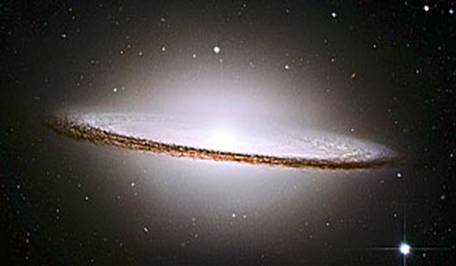
au_01_sombrero
The Sombrero Galaxy – 28 million light years from Earth – was voted best picture taken by the Hubble telescope. The dimensions of the galaxy, officially called M104, are as spectacular as its appearance. It has 800 billion suns and is 50,000 light years across.
Continue reading “Hubble’s Universe is Beautiful”

Pictures from India

Here’s a collection of scenes from India at The Big Picture from bostom.com. (Thanks to Raja Sekhar for the link.)

There are 34 pictures in all there. I chose to include a small version of a picture of Durga idols being made because today is Maha-Ashtami — the 8th day of Durga Puja. In two days, it will be Vijaya Dashmi — the day on which we celebrate the victory of Mother Durga over evil.

Related Post: The Big Picture collection of pictures of the Large Hadron Collider at CERN.

The Large Hadron Collider at CERN

Now for some smashing news. The European Organization for Nuclear Research (CERN) will be firing up the Large Hadron Collider (LHC). It will happen at 1 PM (IST) on Wednesday.

The first attempt to circulate a beam in the LHC will be made on 10 September at the injection energy of 450 GeV (0.45 TeV). This historical event will be webcast through http://webcast.cern.ch, and distributed through the Eurovision network. See http://www.cern.ch/lhc-first-beam for further details.

[Via Cosmic Variance.]

Watch a documentary on the LHC on the History Channel.

After 40 years of planning and construction, the biggest science experiment in history is ready to be tested. The “Large Hadron Collider” is an experiment created by the greatest minds in physics. It cost $10 billion and its resulting data has the potential to explain why we and the Universe exist. Their idea is to smash protons towards one another at the speed of light, trying to mimic what happened in the milliseconds after The Big Bang. Viewers will go on an amazing journey involving the struggles to plan and build the LHC, how it was constructed and what are its mechanics. Explore the future of what’s possible through the geniuses of today. [The History Channel]

For some absolutely stunning pictures (27 of them), go to boston.com’s The Big Picture.

To get a quick tutorial on how a particle accelerator works, play the LHC game. (Click on English, then click on the green arrow, the click on 1, 2, 3, etc.)

A bit from Rutgers

http://picasaweb.google.com/s/c/bin/slideshow.swf

(Click on the picture to go to the Picasa album with larger images.)

I got a master’s degree in computer science from Rutgers University. Visiting Rutgers was a trip down memory lane. Mega dozes doses of nostalgia.