
 The planet Mars is a very advanced planet: it’s entirely populated by robots. People haven’t set foot on Mars but that may change in the next 15 years or so.
The only extraterrestrial body that people have visited is the moon. And on their way to the moon, they got to see the entire earth. Those people are special in this sense: of the estimated 100,000,000,000 (a hundred billion) people who ever lived (around 7.5 billion of whom are alive now), only 24 people have seen the entire earth in one glance. Just ponder that thought for a moment. Only 24 out of billions and billions. Continue reading “Planets and Population”
 The phrase “property rights” appears to refer to the rights of property. That of course is meaningless because property aren’t people, and therefore property cannot have rights. Property rights refers to the notion that humans have the right to their private property. Therefore to place property rights in some form of opposition to human rights — as I did in
  Should society (through its institutions such as the government) defend property rights or human rights? That question is of course meaningless if one of the sets includes the other as a proper subset. But let’s assume for the moment that they are indeed distinct, and therefore the question makes sense.
 How selfish soever man may be supposed, there are evidently some principles in his nature, which interest him in the fortune of others, and render their happiness necessary to him, though he derives nothing from it except the pleasure of seeing it. Of this kind is pity or compassion, the emotion which we feel for the misery of others, when we either see it, or are made to conceive it in a very lively manner. That we often derive sorrow from the sorrow of others, is a matter of fact too obvious to require any instances to prove it; for this sentiment, like all the other original passions of human nature, is by no means confined to the virtuous and humane, though they perhaps may feel it with the most exquisite sensibility. The greatest ruffian, the most hardened violator of the laws of society, is not altogether without it.
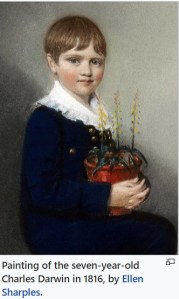 What are the chances that two of the greatest figures of history would be born on the same day? I would leave that to the statisticians and only remark on the fact that in 1809 on this day, February 12th,

 Atanu Dey : Life is a Random Draw