
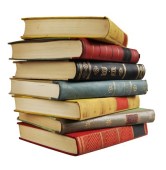
 A few weeks ago, my friend Rajesh pointed me to a list titled, “20 Books You Should Read in Your 20s.” I didn’t like the list; some of the books were too heavy for the average 20-something-year old. Certainly, as a specialized reader, a 20-year old could read many of them but not as a general reader.
It occurred to me that lists like that could not be very useful for the general public, anyway. We all have distinct preferences and interests. That implies, list of books have to be tailored to fit the person. I asked myself, what would the list have looked for a 20-something-year old me? Here is that list. Continue reading “Twenty Books”

 Here’s a list of how many of something that the following countries have:
 I confess that I have strong likes and dislikes in almost everything — concrete or abstract. That goes for people as well. Of course, I have my economist heroes — Hayek, Buchanan, Friedman, et al — and anti-heroes (who shall remain unnamed.) Among politicians, my greatest hero was Lee Kuan Yew and the greatest villain
 This is totally off-the-wall irrelevant since this has nothing to do with any contemporary event. But we do need a break from all the doom and gloom. What gloom, you ask!
 Do you like music? I do. Intensely and passionately. All sorts of music. The range is unlimited. From Hindustani classical vocals to modern composers to Western classical. From old Hindi film songs to rock ‘n roll and heavy metal. I am so glad that I live in an age that I can have access to a virtually unlimited amount of music at my command. It’s magical and amazing.
 If something looks like a duck, walks like a duck and quacks like a duck, it’s a duck. I am not a fan of bitcoin because it looks like a ponzi scheme, works like a ponzi scheme and sounds like a ponzi scheme.
 Atanu Dey : Life is a Random Draw