David Hume

Ever wondered why is it that the Scottish moral philosopher David Hume (1711 – 1776) is usually portrayed wearing what appears to be a tea cozy? Puzzling and funny.

Seriously, though, he was one of the greatest stars of the Scottish Enlightenment. The wiki entry on him is worth a careful read. He was a close friend of another great Scot — Adam Smith (1723 – 1790), also a moral philosopher. Smith is widely recognized as the father of the discipline known as political economy (which we now call economics). His book An Inquiry into the Nature and Causes of the Wealth of Nations (1776) is a masterpiece. Read it when you have a few months of free time. Continue reading “David Hume”

Stop all the clocks

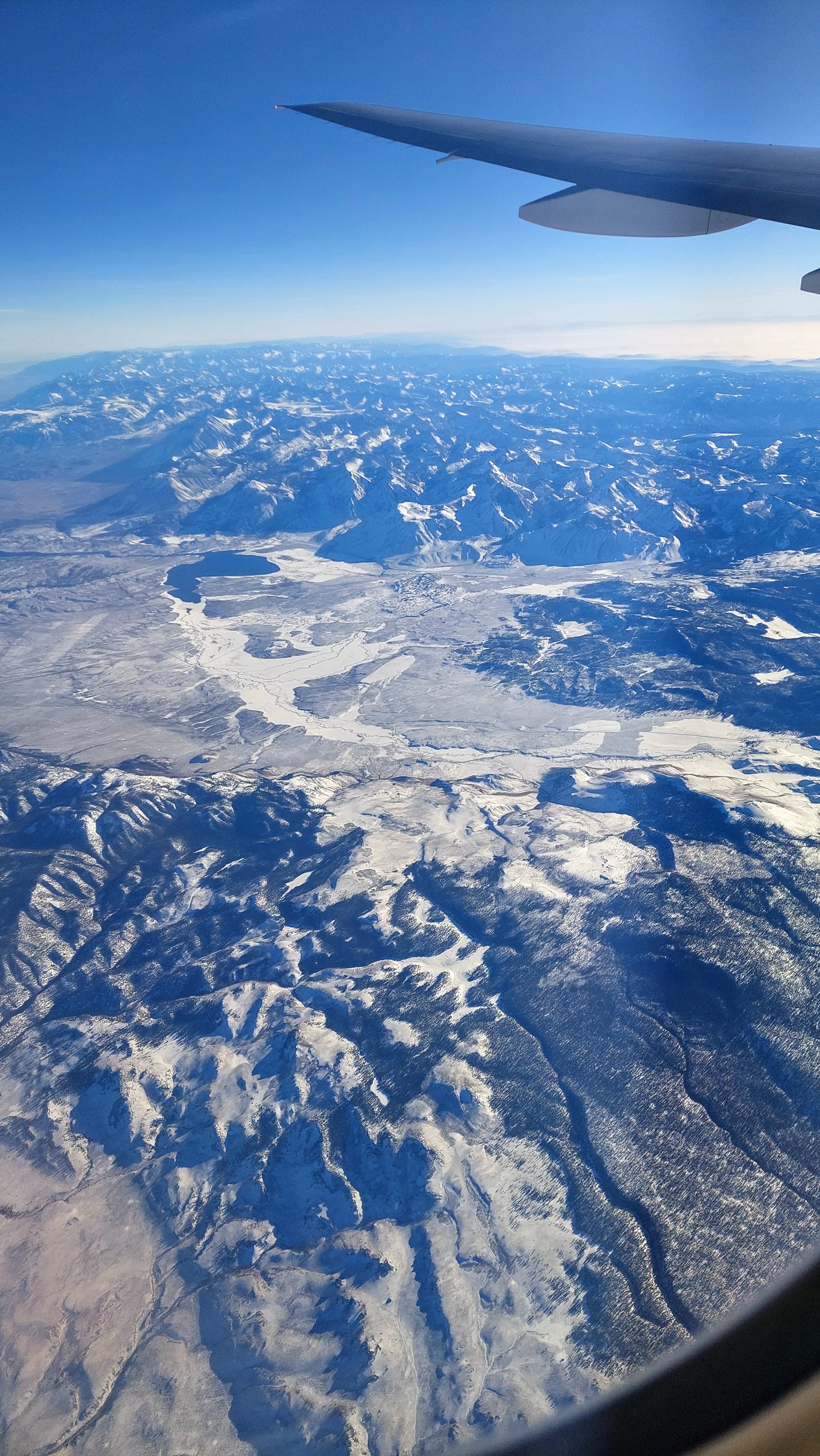
Heading west ©Atanu Dey

Philosophy and poetry are my passions. Philosophy exercises my capacity to reason, and reading poetry (can’t write any) provides me the words that describe my emotions.

But aren’t emotions and reason opposed to each other? Not according to David Hume. In his “Treatise of Human Nature” he argued that “Reason is, and ought only to be the slave of the passions, and can never pretend to any other office than to serve and obey them.”

In modern parlance we’d say that reason is downstream of passions. Reason is the horse and the passions is the rider. Without passion, very little gets done. Continue reading “Stop all the clocks”

Hitchens

The internet reveals to me more than anything else how little I know about the world compared to how much others know. And how intelligent, wise, wealthy, famous, accomplished, and spectacularly talented some others are. In short, granted that I learn a lot through the internet, the unfortunate side-effect is that it gives me an inferiority complex.

Perhaps it’s not a complex; the blunt fact is that I am objectively inferior to those superstars on the internet. But if I set aside my ego, I am genuinely grateful that I live in a world with the world wide web.

I think YouTube is one of the best parts of the web. Over the years I have subscribed to dozens of channels. I spend lots of delightful hours on them. I have many favorite personalities. Such as? Stephen Fry, Christopher Hitchens, to name just two. Continue reading “Hitchens”

Inequality

Pond in West Lafayette, IN. ©Atanu Dey

Inequality is baked into the nature of reality. There’s no escaping it anywhere or anytime. Cosmology holds that the universe began in a state of perfect equality but then following the period of rapid expansion (inflation), inequality appeared in the form of clusters of matter (stars and galaxies) and empty space. The primary force that caused that clumping, physicists contend, was gravity. The weakest of all the four forces, gravity molded the universe into the form it has: clumps and voids.

Equality would have implied a structureless universe. Physicists believe that in the far distant future, the universe will end in a heat death. Then everything will be back to the undifferentiated state of pure equality.

On a much smaller scale and in a different domain, we find the same story of increasing inequality. The first single-celled organisms were all the same. Multicellular organisms have greater diversity. The variety of life forms on earth kept increasing through biological evolution.

Diversity and equality are rival properties. The more you have of the one, the less you have of the other. Naturally this is true of the human world since, being part of the universe, we are not exempt from the fundamental laws of the universe.

*** Continue reading “Inequality”

Imagine

Chicago. Click to embiggen ©Atanu Dey

Imagine, if you would, a world in which people lived in perfect harmony with nature, in which the air was clean and the water pure, in which there were no threat of rising ocean levels or man-made climate change, in which there were no weapons of mass destruction, in which multinational mega corporations were not devastating the natural world seeking profit. A world in which thousands of animal species were not driven to extinction every year through human action.

Imagine the kind of world that John Lennon sang about in his appropriately titled popular song “Imagine”, much beloved of the hippy generation. Imagine no countries … nothing to kill or die for … imagine all the people living life in peace … imagine no possessions. An idyllic world of peace and prosperity. Continue reading “Imagine”

SEZ

In a recent comment, Anirudh wrote: “I notice that the RISC model is in contrast to the development of SEZs( Special Economic Zones), where the focus is on developing certain areas, and giving them special privileges like tax cuts, etc… What do you think about SEZs, which were originally conceived as engines of economic growth? Should we have more of them?”

The RISC model is indeed distinct from “Special Economic Zones”. The RISC model is immersed in the prevailing economic rules. RISC is about what can be done under prevailing rules. SEZs are special, by definition. They have special rules.

I keep insisting that outcomes are a result of rules which govern economic activities — what’s allowed, what’s mandated, what’s prohibited. As I wrote in a recent post, “People as individuals are fairly indistinguishable across the world, save for their history, their culture, the geographies and so on. But as groups, their destinies are astonishingly diverse. I believe that this divergence is due to different set of rules. Rules and norms matter enormously.” Continue reading “SEZ”

Riksdag

Swedish parliament building

I am persuaded that what distinguished various groups (communities and nations) is the set of rules that they choose to impose on themselves and follow. People as individuals are fairly indistinguishable across the world, save for their history, their culture, the geographies and so on. But as groups, their destinies are astonishingly diverse. I believe that this divergence is due to different set of rules. Rules and norms matter enormously.

Historical accident bears that out. The fortunes of East and West Germany diverged post the 2nd World War, even though both had inherited the same culture, history, climate, language, and so on. The different outcomes were the result of different set of rules imposed by the US and its allies on West Germany, and by the Soviet Union on East Germany. One prospered and the other did not. A similar story can be told about North and South Korea. Continue reading “Riksdag”

An Introduction to RISC (from the archives)

Photo by Ravigopal Kesari on Unsplash

Time to revisit RISC — the development model that I proposed over 20 years ago. It was about helping the rural population develop so that they become urbanized. The solution to rural development is urbanization. The first step to urbanization is the development of rural people. That means providing them with services that help them increase their productivity.

The core insight is the importance of distinguishing between rural people and rural areas. We have to focus on the development of rural people and not on the development of rural areas. Quote: Continue reading “An Introduction to RISC (from the archives)”

Abraham Lincoln

A young Lincoln

Abraham Lincoln (1809 – 1865) was the 16th president of the United States, serving from March 1861 to April 1865. He was a complex character. Many have argued that he was the greatest US president.  I greatly respect and admire him, though I don’t agree with a couple of his major decisions.

He was a physical giant: 6 foot 4 inches tall. (Remember, at that time the average American male was probably 5 foot 7 inches.) And he was a mental giant. I was deeply moved by his Gettysburg Address.

The Gettysburg Address is a speech that U.S. President Abraham Lincoln delivered during the American Civil War at the dedication of the Soldiers’ National Cemetery … in Gettysburg, Pennsylvania on the afternoon of November 19, 1863, four and a half months after the Union armies defeated Confederate forces in the Battle of Gettysburg, the Civil War’s deadliest battle. It remains one of the best known speeches in American history

Here’s a bit about Lincoln’s speech in The Civil War documentary by Ken Burns. Continue reading “Abraham Lincoln”

Gandhi Matters – 1

Gandhi matters enormously and he is rightly considered the “Father of the Nation.” That of course means that Gandhi is to a very large degree responsible for what India became (or failed to become) after India’s independence from the British raj.

I haven’t always been a critic of Gandhi. Like the overwhelmingly large percentage of Indians, I uncritically accepted the idea that he was a “a great soul”, a mahatma. Mind you, Mahatma became his de facto first name, not the middle name. I was taught in school that he gave freedom to India, and I believed that to be true. Indians owed their freedom to him, and therefore he should be venerated, if not worshiped by all, and not just Indians. Continue reading “Gandhi Matters – 1”