

Thanks to our bounded rationality and imperfect knowledge, it is certain that we are more likely to be wrong than right about many important issues. Fortunately we have the capacity and the motive to learn. Moreover we have an inexhaustible and nearly costless source of information for us to learn from. Therefore if we are willing to put in the effort, we can be less wrong about important matters.
I know that I am less wrong now than I was a few decades ago. I used to think that the world was in deep trouble because of the population problem: there were simply too many people and since resources were limited, it stood to reason that poverty was likely to persist—and indeed increase—as humanity due to its fecundity exhausted those limited resources.
I found India’s poverty in the 1980s and ’90s particularly distressing since I had seen it firsthand. I believed that India’s deep and persistent poverty was primarily because of its unsustainably large population. It was clear to me that poverty was an arithmetic problem: per capita resource availability. Only by reducing the denominator would the ratio improve since (it seemed to me) there was no way to dramatically increase the numerator which was by definition fixed.
Trained as an engineer as I was, engineering solutions appealed to me. I believed that we had to engineer a reduction in the rate of population growth, and poverty will fall. I was wrong.
I was wrong not because I was stupid but because I did not know how the world worked.
It took a while for me to learn two important features about the world. First, that resources are not limited. For all practical purposes, there are no limits to resources. In fact, there are no “natural” resources; all resources are artificial in the sense that they are human creations.
The second feature follows from the first. Since humans create resources, the more humans there are, the more numerous the resources are likely to be. Therefore it is simply not true that we are going to ever run out of resources merely because of too many people. Indeed the reason that we have so many more resources today compared to any time in the past is because a lot of people (around 100 billion so far) have existed so far on earth.
I know that I have become progressively less wrong. The evidence is there. I have been writing on the web for about 40 years. The evidence of how I used to think exists online—beginning on the usenet in the mid-1980s, and since 1999 on the web. More specifically, I’ve been writing on this blog since 2003. I have written proof of how I conceived of the world years ago and how my thinking has changed.
Two books influenced my thinking about the population problem. The Population Bomb (1968) and The Population Explosion (1990) by Prof Paul Ehrlich (1932 – 2026), the Stanford University biologist, convinced me that the major challenge facing humanity was uncontrolled human population.
Money quote:
“The battle to feed all of humanity is over. In the 1970’s the world will undergo famines-hundreds of millions of people are going to starve to death in spite of any crash programs embarked upon now. At this late date nothing can prevent a substantial increase in the world death rate.”
Ehrlich made a persuasive argument. So persuasive an argument that his books were best sellers and he was invited to Johnny Carson’s The Tonight Show an unbelievable 20 times between 1968 and 1981. Ehrlich certainly convinced me.
My interest in the population problem motivated me to study economics. In retrospect, that was a great outcome for me.
Another book got my attention. While a grad student at Berkeley, I had the privilege of hosting Prof Joel Cohen one day in 1997 when he came to make a presentation centered on his 1995 book How Many People Can the Earth Support?
In a 1997 summary essay published in The New York Review (pdf available at Rockefeller.edu) Prof Cohen wrote:
The Earth’s capacity to support people is determined both by natural constraints, which some will emphasize, and by human choice, which others will emphasize. In the coming half-century, we and our children are less likely to face absolute limits than difficult trade offs—trade-offs among population size and economic well-being and environmental quality and dearly held values. Foresight and action now might make some of the coming trade-offs easier. I hope to offer a perspective that differs from the views of those who say that rapid population growth is no problem at all and those who say that population growth is the only problem. A rounded view of the facts should immunize us against both cornucopians and doomsayers.
The essay is worth a read, although the book is certainly dated by now. It is full of a lot of statistics (a matter that bores me to tears.) He concluded that essay with:
The real issue with population is not just numbers of people, although numbers matter and statistics give us quantitative insight and prevent us from making fools of ourselves. The real crux of the population question is the quality of people’s lives: the ability of people to participate in what it means to be really human; to work, play, and die with dignity; to have some sense that one’s own life has meaning and is connected with other people’s lives. That to me, is the essence of the population problem.
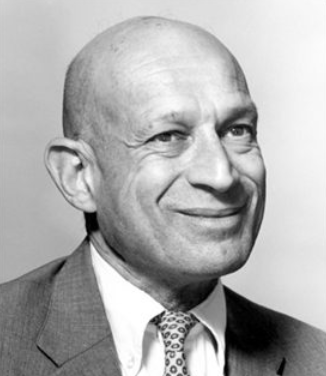
The social sciences taught me that humans are the ultimate resource, and they are the causal factor ultimately responsible for human progress. This I learned from Prof Ehrlich’s nemesis: Prof Julian Simon (1932 – 1998). He was a professor of economics and business.
Like Ehrlich, initially Simon thought that population was a problem but then when he investigated the matter, he realized that humans are the ultimate resource and that with time resources get more plentiful because humans “create” more resources. Humans were not just not a problem but were the solution to the problem of scarcity. Humans lead to abundance.
Ehrlich and Simon had a public bet. Read all about the Simon_Ehrlich wager here. Ehrlich lost handily.
Sadly, though he was a respected scientist and academic at a premier institution, Ehrlich never acknowledged that he was wrong. He did not even have the grace to include a note in the $576.07 check that he mailed to Simon in October 1990. In fact, his wife Anne Ehrlich signed that famous check.

Ehrlich continued to peddle his nonsense in public even in his 90s. In a CBS 60 Minutes segment in 2023, he insisted that he was essentially correct in his predications.
In 1970, Ehrlich claimed that “In ten years all important animal life in the sea will be extinct. Large areas of coastline will have to be evacuated because of the stench of dead fish.” He predicted that England would no longer exist in the year 2000 because of overpopulation and environmental disasters.
From Julian Simon, I learned why resources are all human-made, therefore they are practically unlimited, and that humans are (pardon the repetition) the ultimate resource. Read the book The Ultimate Resource II: People, Materials, and Environment online.
I notice a pretty distressing trend. People are generally negative about the current state of the world and pessimistic about where the world is headed. Lord only knows that the world is not perfect, but it is incomparably better than it used to be. And what’s more, the world is getting better all the time. I am persuaded that the world in the future will be unimaginably better than it is today.
People are healthier, wealthier and happier than ever before. Why and how that happened is quite easy to understand although it is counter intuitive. Once you see that, it is hard to unsee it (as the silly expression goes.)
The factors are quite simply people and technology. People produce technology, and technology brings good things to life. (That’s a double entendre. Get it? “We Bring Good Things to Life” was a slogan used by General Electric from 1979 to 2003.)
Resources
-
-
- “CBS and 60 Minutes should be ashamed of promoting Ehrlich’s oft-debunked nonsense.” January 2023. 60 Minutes Promotes Paul Ehrlich’s Failed Doomsaying One More Time.
- FEE. January 2023. Paul Ehrlich: Wrong on 60 Minutes and for Almost 60 Years.
- Skeptic. YouTube video uploaded November 2024. Paul Ehrlich on The Population Bomb, Climate Change, and the Ethics of Extinction.
-

 Atanu Dey : Life is a Random Draw