
 The 4th of July is celebrated in the US as its Independence Day. The independence of the 13 British colonies from the rule of the British crown in the late 18th century CE is probably one of the most consequential events of the modern world.
Very few events in human history, if any, have had such an enormous impact on the future of humanity as did that event. Many countries (including the land of my ancestors, India) gained independence from British rule but none ever attained the heights that the United States of America eventually did: it became the greatest, richest, and the most powerful nation that the world has witnessed so far.
It’s important to remember that when the American colonies decided to not be subject to the British crown sometime around the 1770s, the British Empire, though very powerful, was not then the globe-spanning force that it was to be in the 19th century CE. Though great in some sense, Great Britain’s days of greatness lay a bit in the future at the time of the American Revolution.
The story in brief is that the 13 British colonies in North America were ruled by the mother country across the Atlantic. At the time American Revolution, the colonists were the subjects of King George III, who reigned from 1760 until his death in 1820. Then at some point around the 1770s the American colonists said something to the effect, “Alright, enough is enough. We don’t want you to rule us if we don’t have a say in what laws we live under. No taxation without representation, if you know what we mean. So we declare independence from your rule.”
So these Americans — remember they were British subjects — decided to fight their British overlords. This was clearly an act of treason. That set the cat among the pigeons. It was the beginning of the American Revolutionary War. The war began in April 1775 with the Battles of Lexington and Concord between American colonists and British forces, and effectively ended in October 1781 with the British surrender at Yorktown. The formal end happened in September 1783 with the signing of the Treaty of Paris which recognized the United States as an independent nation.
I write this to remind myself that 4th of July 1776 was neither the start nor the end of the American Revolutionary war. One may think that one fine day on July 4th, 1776 Americans declared independence, and then that day the United States of America was born. But that’s not how it happened. It took over eight years of bloody — and I mean seriously bloody — struggle before the colonies gained independence.
How many died in that war of American independence? Estimates of American deaths range from 25,000 to 50,000 military deaths and around 10 t0 25 thousand civilian deaths.
American military deaths
-
-
- Combat Deaths: Approximately 6,800 American soldiers died in battle
- Non-Combat Deaths: A far larger number, around 18,000, died from disease, malnutrition, or harsh conditions (e.g., smallpox, dysentery, or exposure.) This brings the total military deaths to around 25,000.
- Prisoners of War: Around 8,000–12,000 American prisoners died in British prison ships or camps, notably in New York, due to starvation, disease, and brutal conditions.
-
Combining combat, disease, and prisoner deaths, estimates range from 25,000 to 50,000, with 25,000 being a commonly cited conservative figure.
Civilian deaths: Civilian losses include deaths from disease, starvation, and war-related violence. Estimates suggest 10,000–25,000 civilian deaths.
Estimated total American deaths therefore lie in the 35,000 to 75,000 range.
The British had sent 50,000 soldiers to the colonies to fight the war. For the British, the estimates are around 19 to 24 thousand military deaths. British civilian deaths were minimal since the war was fought in America.
BONUS FACTS
-
- The American Revolution would have failed without the help of the French. The role of the French in the American Revolution was pivotal. France provided critical financial support, troops, naval forces, and military leadership. The French involvement began covertly in 1776 and escalated into a formal military alliance in 1778 with the Treaty of Alliance. This alliance included the deployment of 12,000 French soldiers and 22,000 naval personnel, along with 63 warships, which played a decisive role in key battles, including the Siege of Yorktown in 1781. The French naval victory at the Battle of the Chesapeake led to the surrender of General Cornwallis and effectively ending major combat operations. French diplomatic support was vital in the negotiation of the Treaty of Paris in 1783, which formally recognized American independence. The financial burden of the war also contributed to France’s economic crisis, which later played a role in the French Revolution.
- German mercenaries fought on the British side. The Hessians were German troops hired by the British to fight during the American Revolutionary War. They made up a significant portion of the British forces, with approximately 30,000 German troops participating in the conflict. They entered the British service as entire units with their own uniforms, flags, equipment, and officers. The British used these troops as auxiliaries. Some Hessians chose to desert the British forces, and a few of them were returned in exchange for American prisoners of war. These deserters faced persecution from both the British and the colonists. After the war, some Hessians remained in Canada and the United States.
Let’s pause for a bit to take stock of the population numbers. The 13 American colonies had a population of 2.5 million people in 1776. That figure includes around half a million black slaves but does not include native Americans. The population of the North American colonies was very small compared to the population of the US today: 330 million.
The conservative estimate is that around one to two percent of the population of the American colonies died in the American Revolution.
Compare that to the Indian experience when the British left India in August 1947. If Indians had fought the British for their “independence” and suffered casualties comparable to the American experience, then around 5 million Indians (the population then was 350 million) would have died in battle. But there was no war of Indian independence. The British simply left because they were tired.
So then back to America. What’s the deal with July 4th, 1776? It is the date that the 13 colonies declared their independence. The declaration was signed by 56 men. That made them traitors and therefore in effect they signed their death warrants.
(There’s more to it. When did they actually sign the document? Was it finally done on Aug 2nd? It’s not as if they all sat around in a room in Philadelphia and signed it on one particular day. What happened to those 56?)
 So today we in the US celebrate an act of treason. Picnics and fireworks everywhere.
My favorite go to place to watch the 4th of July fireworks in San Jose, CA was the Almaden Lake Park.
Here are a few pictures and videos from 10 years ago.
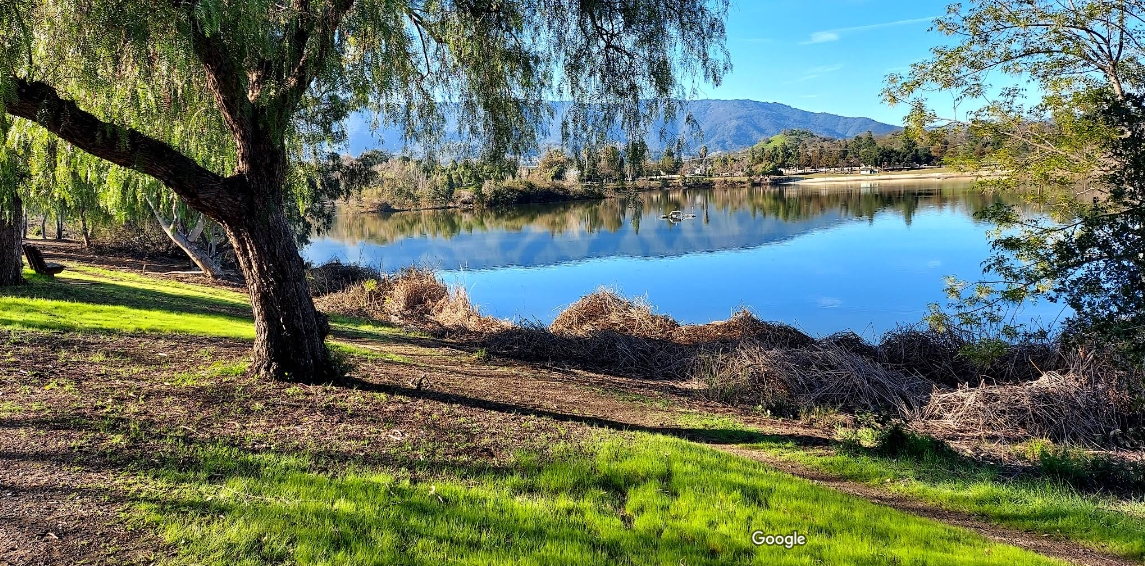 Almaden lake park on a regular afternoon. A nice place to go for a quiet walk. But on the 4th, you have to get there early to find a place to park your party.
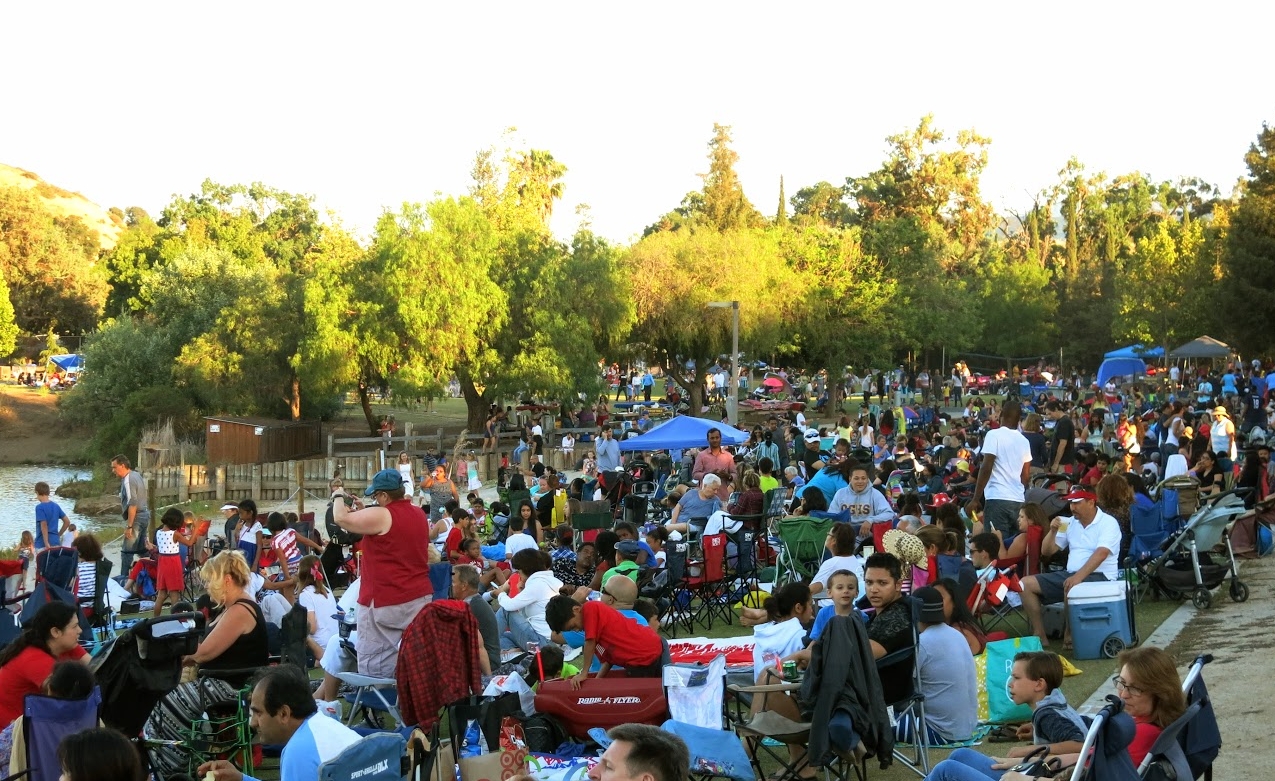
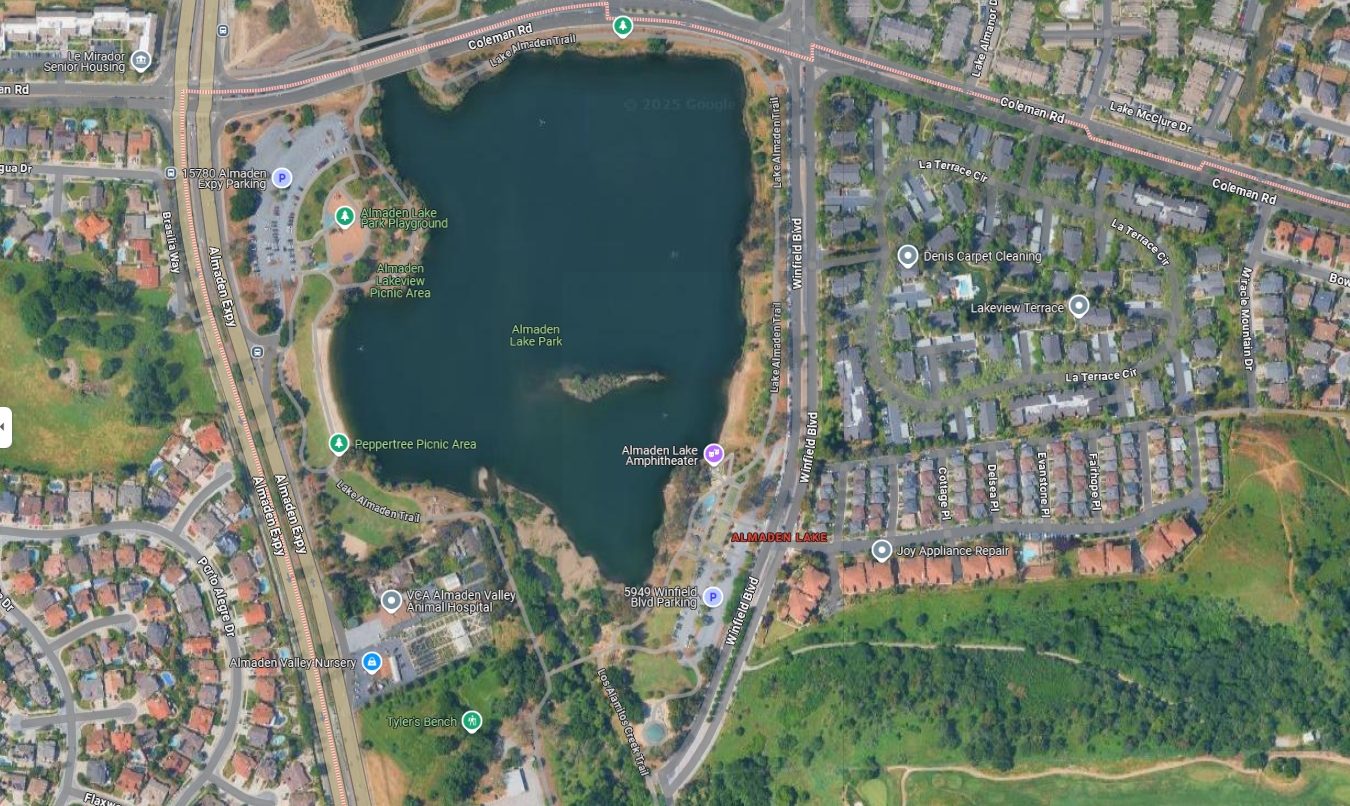
It gets crowded. That’s what it was like around an hour before sunset on July 4th, 2015. It’s a pretty good park. Here’s a google map view of the location. Almaden expressway to the left of it.
It’s real fun to be there: people, food and drinks. And the anticipation of the fireworks. Then a bit after sunset, the show begins. Here are a few videos. I took these with my Canon G15 point and shoot camera.
The fireworks show lasts around 20 minutes. The grand finale is pretty spectacular. I start with that here.
Now the rest. This one is from around the beginning.
Next:
Next number 3:
Number 4. This one came out very good. Watch —
Number 5:
Number 6:
And then the end. People walking out of the park. Khel khatam.
Happy 4th to all, and Happy Birthday USA!

 Atanu Dey : Life is a Random Draw