Goodbye, Tom Lehrer

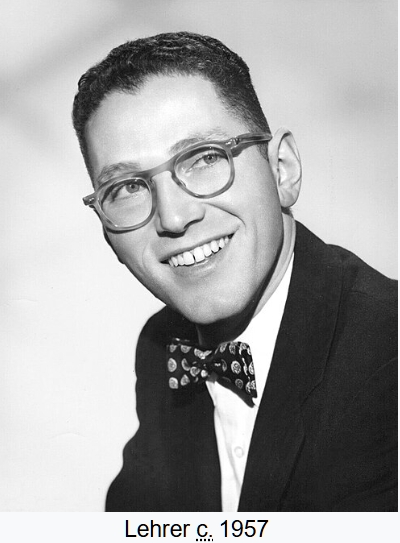
Today I am sad. I learned that Tom Lehrer passed away recently. I have loved his songs for decades. He passed away a few days ago at the age of 97 on 26th July in Cambridge, Massachusetts.

Here’s a brief introduction (edited from an AI answer.)

Tom Lehrer was an American musician, singer-songwriter, satirist, and mathematician. Born in New York City to a secular Jewish family in April 1928, he was considered a child prodigy and entered Harvard College at the age of 15. As a mathematics undergraduate student at Harvard College, he began to write comic songs to entertain his friends.
He recorded pithy and humorous songs that often parodied popular musical forms, though they usually had original melodies. Lehrer’s early performances dealt with non-topical subjects and black humor in songs such as “Poisoning Pigeons in the Park”. In the 1960s, he produced songs about timely social and political issues.


Continue reading “Goodbye, Tom Lehrer”

George Steiner on Literacy

A pleasure that I enjoy immeasurably is listening to good talks. Thanks to the magic of the internet, particularly YouTube, we have available an inexhaustible store of great content within easy reach. I would like to tell you about someone who is considered an intellectual giant: literary critic extraordinaire and professor of comparative literature, George Steiner.

I got to know about him around 2010 or so. He was one of the people featured in the Dutch TV documentary series, “Of Beauty and Consolation,” released in 2000. (It is available on YouTube.)

More recently I found a lot more of his talks on YouTube. But first, here’s an introduction to the man. I asked grok to do the needful.

George Steiner (1929–2020) was a French-American literary critic, essayist, philosopher, and translator, renowned for his profound and interdisciplinary approach to literature, culture, and language.

Born in Paris to Austrian Jewish parents, he fled Nazi persecution with his family, settling in the U.S. in 1940. A polyglot and polymath, Steiner was educated at Yale, Harvard, and Oxford, and his work reflects a deep engagement with Western literary and philosophical traditions.

Steiner was fluent in four languages: English, French, German, and Italian. He also knew Latin and Greek. 

Continue reading “George Steiner on Literacy”

Global Warming and Climate Change

It is widely reported that Kurt Vonnegut gave a commencement address at MIT in 1997 in which he advised the graduating class to “wear sunscreen.” But in fact it was actually a column written by Mary Schmich, published in the Chicago Tribune on June 1, 1997. It was a hypothetical commencement speech which gained fame after being misattributed to Vonnegut that wearing sunscreen was advised.

That’s another example of the phenomenon which Michael Crichton named the Gell-Mann Amnesia effect [1]. But I digress. Here’s what I wish to stress. If I were invited to give a commencement speech, an extremely unlikely event, my main advice would be to “choose your experts wisely.”

Choose very carefully whom you wish to trust. In this complex world of ours, none of us knows what is true. That’s simply because we lack the time and the talent to figure out what’s true for ourselves. Therefore we have to rely on experts. That’s what we economists call specialization.

Some people specialize in climate science, some on economics, some on AI, and so on. Because we specialize, we depend on others with their own special knowledge to tell us what is what.

You have to be careful whom you trust. If you choose as your experts activists who are committed to their agendas, you are likely to be deceived. The ax that they are grinding is meant for your wallets to start with but could end up at your neck. Continue reading “Global Warming and Climate Change”

Richard Dawkins is an Idiot

I think Dawkins is an idiot. But then in his defense we have to admit that every one of us is an idiot in the same sense that I judge him to be an idiot in this piece. 

Here I am not using the clinical definition of an idiot as a person with profound intellectual disability broadly characterized by a mental age below three years and an intelligence quotient (IQ) under 25. Compared to us unwashed masses, Dawkins is an intellectual giant who has made significant contributions in his domain of biology. He has also affected popular culture. He coined the word “meme” half a century ago in his first best-seller “The Selfish Gene”! You don’t get more hard-core than that.

In this case of Dawkins, I am using the term idiot colloquially which means someone who appears to lack basic common sense. Continue reading “Richard Dawkins is an Idiot”

Guru Purnima

Bhagwan Shiva

The word guru in the dharmic traditions—namely Sanatana, Buddha and Jaina—refers to someone who dispels the darkness of ignorance. Because ignorance is the primary barrier to enlightenment or moksha, the guru is supremely important.

Today is Guru Purnima. Hindus believe that on this day Bhagwan Shiva became the first guru (adi guru) when he transmitted the knowledge of yoga to the world. Also that sage Vyasa, the author of the Mahabharata, was born on this day.

For Buddhists, Guru Purnima commemorates the day when Gautama Buddha delivered his first sermon at the Deer Park in Sarnath, setting in motion the Wheel of Dharma. For Jains, it is the day when Mahavira, the 24th tirthankara accepted his first disciple. These two events are dated to around 2,500 years ago. Continue reading “Guru Purnima”

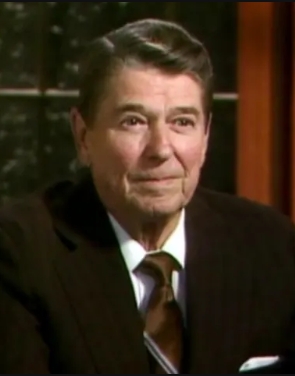
Reagan hosts Lee Kuan Yew

Ronald Reagan is undoubtedly my favorite US president. He was a good man but of course not without his faults (just like the rest of us.) Another favorite — perhaps the best — politician of our modern world was Lee Kuan Yew. He was extremely wise and extremely intelligent: a combination rarely present in politicians. He was a blessing to our world. He influenced the world, not just tiny Singapore.

President Ronald Reagan hosted Prime Minister Lee  Kuan Yew at the White House on October 8th, 1985. The video of the remarks before the formal dinner is heartwarming. Continue reading “Reagan hosts Lee Kuan Yew”

The Birth of a Nation

The 4th of July is celebrated in the US as its Independence Day. The independence of the 13 British colonies from the rule of the British crown in the late 18th century CE is probably one of the most consequential events of the modern world.

Very few events in human history, if any, have had such an enormous impact on the future of humanity as did that event. Many countries (including the land of my ancestors, India) gained independence from British rule but none ever attained the heights that the United States of America eventually did: it became the greatest, richest, and the most powerful nation that the world has witnessed so far.

It’s important to remember that when the American colonies decided to not be subject to the British crown sometime around the 1770s, the British Empire, though very powerful, was not then the globe-spanning force that it was to be in the 19th century CE. Though great in some sense, Great Britain’s days of greatness lay a bit in the future at the time of the American Revolution. Continue reading “The Birth of a Nation”