
 “When you are inspired by some great purpose, some extraordinary project, all your thoughts break their bonds. Your mind transcends limitations, your consciousness expands in every direction, and you find yourself in a new, great and wonderful world. Dormant forces, faculties and talents become alive, and you discover yourself to be a greater person by far than you ever dreamed yourself to be.”
― Sage Patanjali’s Yoga Sutras. “Method of Enlightenment.” Compiled ca. 2C BCE to 5C CE.
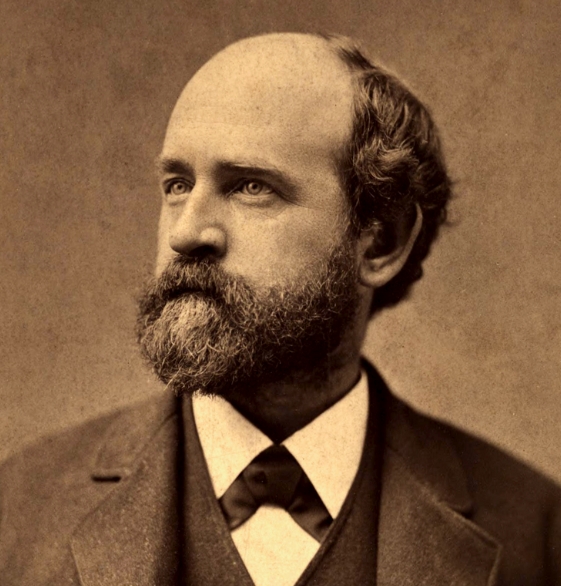 “Here is a difference between the animal and the man. Both the jay-hawk and the man eat chickens, but the more jay-hawks the fewer chickens, while the more men the more chickens. Both the seal and the man eat salmon, but when a seal takes a salmon there is a salmon the less, and were seals to increase past a certain point salmon must diminish; while by placing the spawn of the salmon under favorable conditions man can so increase the number of salmon as more than to make up for all he may take, and thus, no matter how much men may increase, their increase need never outrun the supply of salmon.”
― Henry George (1839 – 1897). American political economist. He inspired the economic philosophy called Georgism. The above quote is from his 1879 book Progress and Poverty.
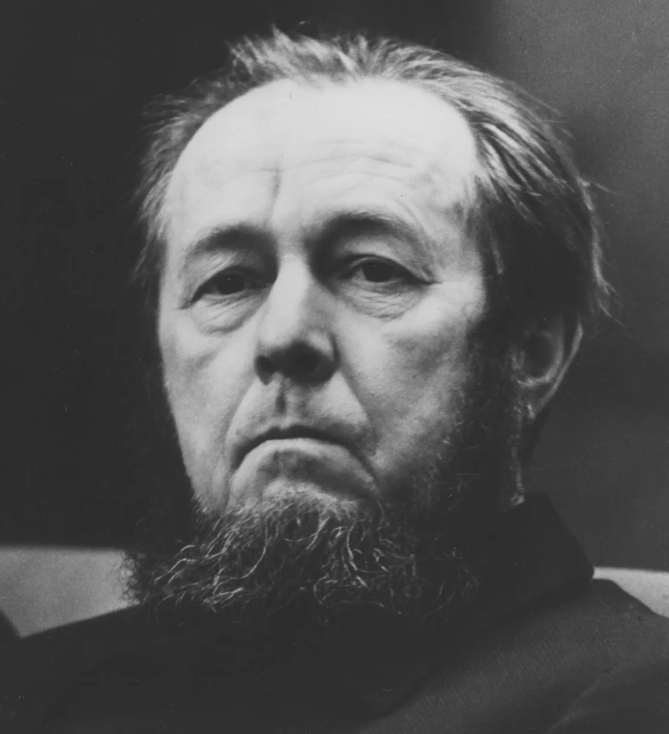 “Human beings are born with different capacities. If they are free, they are not equal. And if they are equal, they are not free.”
― Aleksandr Solzhenitsyn (1918 – 2008). Russian dissident, novelist, historian. Awarded the Nobel Prize for literature in 1970.
 “Against stupidity we have no defense. Neither protests nor force can touch it. Reasoning is of no use. Facts that contradict personal prejudices can simply be disbelieved — indeed, the fool can counter by criticizing them, and if they are undeniable, they can just be pushed aside as trivial exceptions. So the fool, as distinct from the scoundrel, is completely self satisfied. In fact, they can easily become dangerous, as it does not take much to make them aggressive. For that reason, greater caution is called for than with a malicious one. Never again will we try to persuade the stupid person with reasons, for it is senseless and dangerous.”
― Dietrich Bonhoeffer (1906 – 1945). He was a German Lutheran pastor who was accused of being associated with the July 1944 attempted assassination of Hitler and hanged in April 1945.
Bonus quote on stupidity:
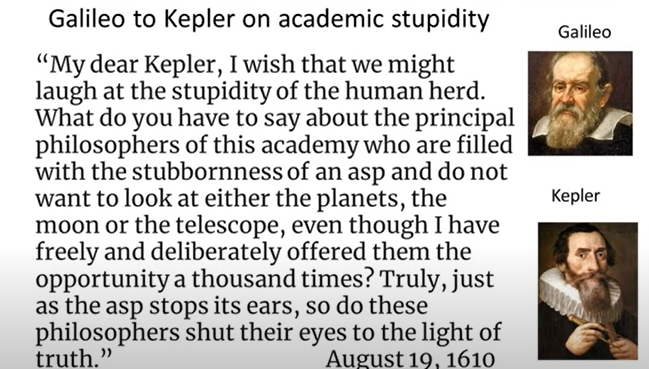 My dear Kepler,
I wish we might laugh at the stupidity of the human herd. What do you have to say about the principal philosophers of this academy who are filled with stubbornness of the asp and do not want to look at either the planets, the moon or the telescope, even though I have freely and deliberately offered them the opportunity a thousand times? Truly, just as the asp stops its ears, so do these philosophers shut their eyes to the light of truth.
Galileo Galilei. Aug 1610.
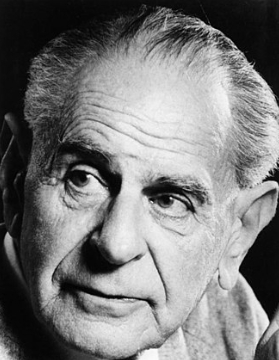 “I have insisted that we must be tolerant. But I also believe that this tolerance has its limits. We must not trust those anti-humanitarian religions which not only preach destruction but act accordingly. For if we tolerate them, then we become ourselves responsible for their deeds.”
— Karl Popper (9102- 1994). Austrian-British academic; one of the 20th century’s most influential philosophers of science.
David Deutsch, physicist extraordinaire, cannot ever speak for more than a few minutes without invoking Popper. So here’s a bonus Popper quote because I admire Deutsch:
“Philosophers should consider the fact that the greatest happiness principle can easily be made an excuse for a benevolent dictatorship. We should replace it by a more modest and more realistic principle: the principle that the fight against avoidable misery should be a recognized aim of public policy, while the increase of happiness should be left, in the main, to private initiative.”
This piece began with Sage Patanjali’s quote about the inspiration that great projects provide. I end with a similar one from a more recent author.
. . . Until one is committed, there is hesitancy, the chance to draw back, always ineffectiveness. Concerning all acts of initiative (and creation), there is one elementary truth the ignorance of which kills countless ideas and splendid plans: that the moment one definitely commits oneself, then providence moves too. A whole stream of events issues from the decision, raising in one’s favor all manner of unforeseen incidents, meetings and material assistance, which no man could have dreamt would have come his way. I learned a deep respect for one of Goethe’s couplets:
Whatever you can do or dream you can, begin it.
Boldness has genius, power and magic in it!
— W.H. Murray. The Scottish Himalayan Expedition (1951)
As I was writing this piece, I was listening to a favorite song — Fm Delight — by a pioneer of synthesizer music, the incomparable German composer Klaus Schulze (1947 – 2022). I listen to this piece dozens of times a month. It is hypnotic. It’s relentless. It’s genius. It transports me to a different realm as the mantra of the Prajna Paramita Hridaya sutra goes–
Gone, gone, gone beyond, gone completely beyond,
Enlightened mind, So be it.
The transition at 14:00 time stamp is awesome. Have fun. Cheers!

 Atanu Dey : Life is a Random Draw