
 “Hard times create strong men. Strong men create good times. Good times create weak men. And, weak men create hard times.” ― G. Michael Hopf
The decline of the West is evident. In some sense, this is an inescapable result of its own successes in science and technology. The scientific method — and the resulting technologies that that produced — resulted in the incredible increase in material wealth. That immense material wealth, unmoored from an appropriate philosophy that would have provided meaning and purpose to life, has produced a generation that is actively engaged in destroying the foundations of wealth and prosperity it enjoys but has not produced.
But there is hope. The foundation that the West was built on was strong and served to create prosperity. However that philosophical foundation was only adequate for a civilization that was engaged in escaping poverty and managed to do so remarkably well. But that philosophical foundation is no longer suited to a prosperous world.
For that, the West has to turn to the Eastern, particularly the Indian, philosophical traditions. Why? Because the Indian tradition concerns itself not with wealth but with what transcends wealth. All indications are that the West is slowly but surely waking up to that, and therein lies the way out of this decline.
Some of the greatest Western philosophers of the last few centuries have been acquainted with ancient Indian thought, and have understood its value. It remains for the broader Western intellectual community to recognize the value. Western metaphysics broadly leads to materialism and physicalism. [See the Stanford Encyclopedia of Philosophy for an accessible introduction to physicalism.]
Bernardo Kastrup, a celebrated contemporary philosopher with a background in the hard sciences, has been arguing against materialism, and for analytical idealism. Read the overview of his book “Why Materialism is Baloney.” It appears that his position is approximately (but not entirely) that of advaita vedanta.
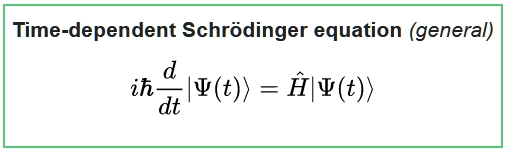 Many of the greatest scientists of the 20th century CE have adopted the advaita vedantic view of reality. Erwin Schrödinger ( 1887 – 1961), one of the greatest scientists famous for his eponymous equation (and of course his cat), believed in the primacy of consciousness. He often concluded his lectures with the advaitic statement that Brahman is Atman. I am that. I am Brahman.
Schrodinger called that the grandest of all thoughts of the human mind.
Watch this video by Dr Graham Blackbourn of the Scottish branch of the School of Philosophy and Economic Science. He says that he “was fascinated by how many of the pioneers of quantum mechanics were interested in ancient philosophy, especially Indian philosophy.” He says that instead of Schrodinger, he could have “spoken about Wolfgang Pauli or Werner Heisenberg, both were awarded the Nobel Prize in physics, or David Bohm or Robert Oppenheimer.” All of them were understood the vedanta.
Watch the whole bit but start around 7:35 time stamp if you’re short on time:
I don’t mean to boast but the first time I heard Atman=Brahman, I got it instantly. I instinctively realized the entirety of vedanta. Everything I read or heard about vedanta after that was mere exegesis. Atman is Brahman. That is all.
Talking of atman, you’d be tickled to know that Arthur Schopenhauer, author of The World as Will and Representation (1819), named all of his pet poodles “Atman”. He was the greatest.
And that Sam Altman of ChatGPT (whose last name is almost Atman) wrote in a 2022 post on twitter (now X) this:
 What true thing do you believe that few people agree with you?
Absolute equivalence of Brahman and Atman.
You wouldn’t have expected that a Silicon Valley CEO would know anything about advaita vedanta but like I said, times are a-changing. Dharma is becoming popular among the Western intelligentsia remarkably fast.
Did you know that Steve Jobs was a follower of a Hindu guru? He had arranged that the attendees at his memorial service would receive a final parting gift: a copy of the book “The Autobiography of a Yogi” by Paramahansa Yogananda.
In Indian thought lies the path out of the morass that the West finds itself in. You may ask whether this talk about decline is true. I think it is. Here’s Konstantin Kisin on the matter. Trust me, he is worth a listen. Perceptive and intelligent, his delivery has a charming forthrightness.
The West isn’t just ‘different’; it’s better. But it’s in decline.
In just 15 minutes, @KonstantinKisin explains how to save it. pic.twitter.com/TSnnRZd4Op
— TRIGGERnometry (@triggerpod) December 17, 2024
{You can watch that video on youtube also.}
I will be back with an explanation of why Indian philosophy developed so differently from the Western philosophies. It has to do with geography.
Atman is Brahman. And it’s all karma, neh?

 Atanu Dey : Life is a Random Draw
“Create wealth” — does drilling oil create wealth?
Or “a nations primary wealth lies in the collective talent and skills of its population” as this guy argues:
https://www.linkedin.com/pulse/wealth-education-nations-robert-hercock
LikeLike
Asmi:
“Does drilling oil create wealth?” Maybe it does, or maybe it doesn’t. Depends on what one means by “wealth.” If oil is not useful, then drilling for oil is pointless and therefore that does not create wealth.
“a nation’s primary wealth lies in the collective talent and skills of the population”? Perhaps it does, or perhaps it does not. Is it either the drilled oil or is it the talent and skills? Perhaps both and not in one or the other.
The article referred to in the linkedin.com site is at best confused and incoherent. Its analysis is superficial and suffers from fundamentally wrong premises.
It would take me tens of pages to explain why it is wrong. It’s that old problem that is called Brandolini’s law: The amount of energy needed to refute bullshit is an order of magnitude bigger than that needed to produce it.
But I will not shy away from expending the energy to refute many of the most egregious claims made in it. Maybe I will write a post.
Still, I would be interested in learning what you, Asmi, find interesting and true in the article. That would help me narrow down which bit of the bullshit I should focus on. Thanks.
LikeLike
I am interested in Figure 2 – GDP per capita as a function of PISA science scores
Something similar:
https://www.statista.com/statistics/238733/expenditure-on-education-by-country/
Thanks in advance, Atanu
LikeLike
Oil drilling is perfect example of wealth creation. Oil provides the energy that is essential for EVERY aspect of life and raw material for 90% what constitutes modern life.
LikeLike