
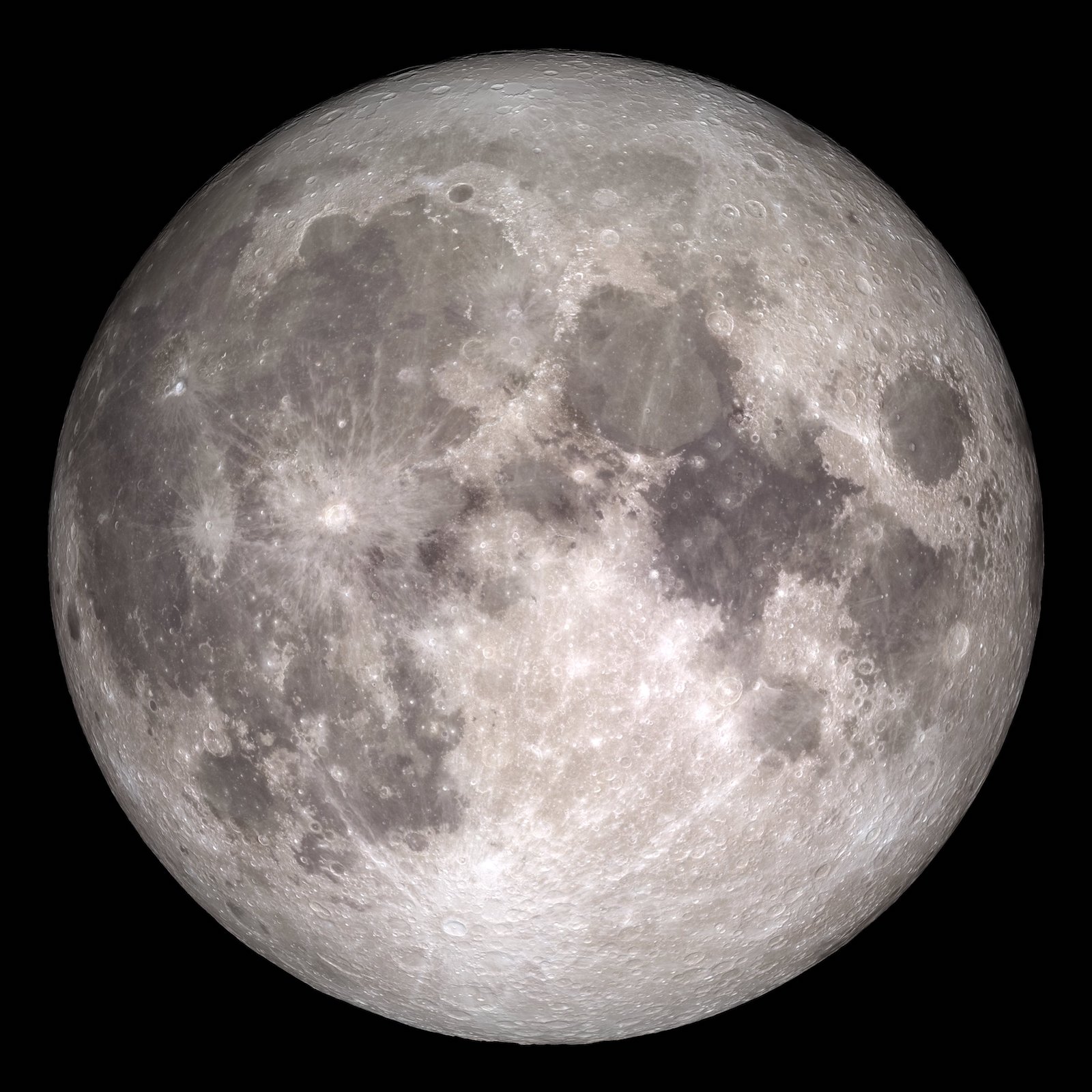
 Since time immemorial, we humans have looked up and wondered at the moon, earth’s only natural satellite. We continue to be captivated by the beauty of the moon and the 28-day cycle of waxing and waning. Not just that, the moon has played a crucial role in shaping our planet’s evolution and the development of life itself.
Modern scientific theories explain the origin of the moon and its impact on life on earth. Indeed the moon began with an impact, an interplanetary impact. The leading theory is the Giant Impact Hypothesis. According to that, about 4.5 billion years ago, a Mars-sized protoplanet called Theia collided with the earth. This massive impact ejected a vast amount of debris into space, consisting of material from both earth and the impactor. This debris coalesced due to mutual gravitational attraction over time, forming our moon. This explains several key observations, including the similarity between moon rocks and earth’s mantle composition, and why the moon is relatively large compared to earth. Continue reading “Our Moon”

 Atanu Dey : Life is a Random Draw