Why I am a Hindu – Part 3

I explained previously (see part 1 and part 2) that I’m a Hindu because I was born to the dharma and not to a religion. My starting off as a Hindu is an accident of birth, not something that I rationally decided on. But I have had ample opportunities to learn about the dharmas and the three major world religions — and rejected the religions only after rational consideration. I was born a Hindu but I continue to be follow dharma even after I know about the religions.

As an adherent of the dharmic traditions, I don’t believe in any god and I am not religious. Therefore I’m an atheist by the very definition of the term — one who does not believe in any god or gods. I am also an agnostic. Continue reading “Why I am a Hindu – Part 3”

Negative Rights and Minimalist State

Bell Rock, Sedona AZ (Click to embiggen)

Are there any examples of governments that only protect negative rights? Reader Sambaran asked that question in the latest AMA.

It may be useful to review what is meant by negative rights, and what distinguished them from positive rights. Negative rights are rights that require others (including the government) to refrain from interfering with an individual’s actions. It is a “freedom from” something. The right to life, liberty, private property, etc. are examples of negative rights. It is freedom from coercion by others. In the securing of negative rights, people are not required to take any action — merely refrain from acting in certain ways. Continue reading “Negative Rights and Minimalist State”

Texas Interchanges

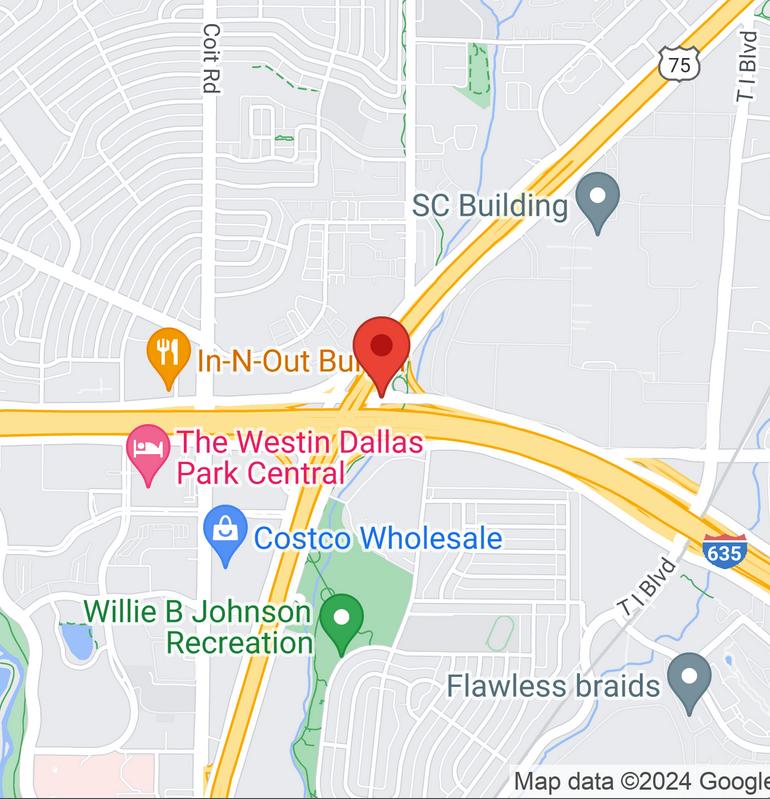
Dallas High Five Interchange (C) Atanu Dey

Practical Engineering is a channel I follow on YouTube. The host, Grady, is a brilliant engineer and explainer of things engineered. Consider for instance a video he uploaded yesterday. In it, he talks about the Dallas High Five Interchange.

I have taken that interchange scores of times. My friend Yoga has a home in Allen, TX — a suburb about 30 miles north of Dallas on highway 75.

And there’s a Costco about 10 miles south from Allen on 75 in Plano, TX. Wherever I am in the US, I visit a Costco every week. I get everything from Costco: food, drink, clothes, furniture, fridge, washer/dryer, TV, computers. I even got my most recent car from Costco. As I say, if you can’t get it at Costco, you can do without it.
Continue reading “Texas Interchanges”

Why I am a Hindu – Part 2

Bertrand Russell 1949

The title of this series of posts, “Why I am a Hindu”, is a nod to Bertrand Russell’s “Why I am Not a Christian”, a pamphlet published in 1927, based on a talk he gave earlier that year. About him, the Stanford Encyclopedia of Philosophy says —

 . . . Russell is generally recognized as one of the founders of modern analytic philosophy. His famous paradox, theory of types and work with A.N. Whitehead on Principia Mathematica invigorated the study of logic throughout the twentieth century . In the public mind, he was famous as much for his evangelical atheism as for his contributions to technical philosophy.

We all are idiots compared to him. No offense to the geniuses (none) who are reading this post.

I feel a strong kinship with Russell. In the brains department I’m of course a minnow compared to the whale that he was. The kinship is purely in our emotional makeup. He could have been describing me when he wrote in his biography —

Three passions, simple but overwhelmingly strong, have governed my life: the longing for love, the search for knowledge, and unbearable pity for the suffering of mankind. These passions, like great winds, have blown me hither and thither, in a wayward course, over a great ocean of anguish, reaching to the very verge of despair. Continue reading “Why I am a Hindu – Part 2”

Why I am a Hindu – Part 1

The short answer to the question “why am I a Hindu” is simply because I was born to a Hindu family. That’s generally the case for all Hindus because one cannot convert to being a Hindu. That distinguishes the Hindu dharma from religions.

Here I have to distinguish between religions and dharmas. There are three major world religions. They are Judaism, Christianity and Islam in the order they arose. That’s the monotheistic family. They all arose in the Middle East. Judaism oral tradition goes back over 4,000 years and the written texts around 3,500 years. Christianity is around 2,000 years old and Islam only 1,400 years old. Continue reading “Why I am a Hindu – Part 1”

Trade

Indian sweets

Why is the world today so much richer than it used to be any time in the past — whether a few years or a few centuries ago? There are many factors that contributed to the wealth of the world. However if forced to answer in one word, I’d say “trade” or “exchange.”

We trade all the time. We trade our labor for stuff. We earn income by giving up some our leisure time to produce stuff and then exchange the income for stuff we wish to consume. Meaning our production is the means we use for the end goal of consumption. All of this is just common sense and not quantum mechanics.

Trade is a superpower that only we humans possess. In his 1776 masterwork “The Wealth of Nations,” Adam Smith wrote that it was “division of labour” that created the “general opulence” we enjoy. But he stressed that this specialization and division of labor is not because humans figured it out through their wisdom but because of “a certain propensity in human nature . . . : the propensity to truck, barter, and exchange one thing for another.” Continue reading “Trade”