
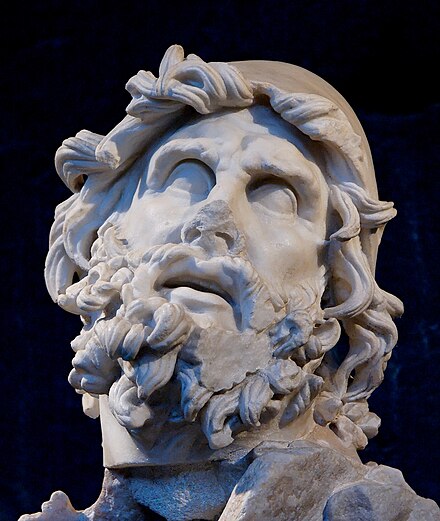
I find mythologies fascinating for various reasons the most important of which are that they help one make sense of the world and also learn how to navigate it.
Greek, Roman, and Norse mythologies are all great sources of delight and edification but the best of all is Indian mythology. Of course I am biased but it is nevertheless true that Indian mythology has no equal.
Homer’s epics Illiad and Odyssey are great mythological works but Ved Vyasa’s Mahabharata is the pinnacle of human achievement in that domain. The Mahabharata was complied between the 3rd-century BCE and the 4th-century CE. It is so good partly because it evolved over several centuries.
The consensus places the composition of Homer’s epics in the 8th century BCE, marking a significant period in the development of Greek literature and culture. The legends are set centuries earlier, the period around the Trojan War. Scholars estimate that the Homeric epics are set around the 12th-century BCE.
The hero in Homer’s Odysseus is naturally Odysseus (which in Latin is Ulysses). Here’s a bit from the wiki:
When Helen of Troy is abducted, Menelaus calls upon the other suitors to honor their oaths and help him to retrieve her, an attempt that leads to the Trojan War. Odysseus tries to avoid it by feigning lunacy, as an oracle had prophesied a long-delayed return home for him if he went. He hooks a donkey and an ox to his plow (as they have different stride lengths, hindering the efficiency of the plow) and (some modern sources add) starts sowing his fields with salt. Palamedes, at the behest of Menelaus’ brother Agamemnon, seeks to disprove Odysseus’ madness and places Telemachus, Odysseus’ infant son, in front of the plow. Odysseus veers the plow away from his son, thus exposing his stratagem. Odysseus holds a grudge against Palamedes during the war for dragging him away from his home.
As the oracle had prophesied, Odysseus is indeed gone from home for decades. He was rightly apprehensive about leaving his family and home for so long. But a man is bound by his duty and honor. So off he went to fight the Trojan War.
Things took time in the olden days. The war lasted 10 years. Recall the story of the Trojan horse and remember the admonition to beware of Greeks bearing gifts.
The Trojan war being over, our hero now heads home to Ithaca. The return journey, which itself would take another 10 years, is the subject of “The Odyssey.” This odyssey happened around 3,000 years before the “2001: A Space Odyssey” (one of the greatest sci fi movies; highly recommended.)

The reason that the homeward journey took so long was not because they were lousy seafarers but because of various divine obstacles such as Poseidon’s wrath. You may recall that Poseidon was one of the Twelve Olympians who lived on Mount Olympus and also in the ocean because he ruled over the sea, storms, earthquakes and horses. That was a busy god.
A few years into the return journey, Odysseus and his crew had a year-long layover at Circe’s island bearing the palindromic name Aeaea. I don’t mind six or eight hour layovers as long as I have nice lounge access but a year-long layover is out of the question for me.
But I guess Odysseus and his team were looking for some rest and relaxation on solid ground. The island must have been pretty and besides their host Circe was a sorceress. She knew stuff and could cast spells. She warned Odysseus about the Sirens on his way home and told him to avoid them for otherwise he’d surely die.
The Sirens’ island was one of several dangerous locations Odysseus had to navigate on his way home. It was situated between Aeaea and the twin terrors of Scylla, which was a six-headed monster, and Charybdis, a deadly whirlpool.
Brief aside. Many years ago I had heard the names Scylla and Charybdis in the lyrics of a song “Wrapped around your finger” by the band The Police.
You consider me the young apprentice
Caught between the Scylla and Charybdis
Hypnotized by you if I should linger
Staring at the ring around your finger
That’s like being caught between a rock and a hard place. You can listen to that song at the end of this post. Now let’s get back to Circe’s warning about the Sirens. Who were they? Here’s their backstory.
The two Sirens, daughters of the river god Achelous, were companions of Persephone. According to Ovid (43 BCE – 17 CE), when Persephone was abducted by Hades, Demeter gave them wings to search for her.[1] Others say that Demeter cursed them for failing to prevent the abduction of Persephone. (For more, see wiki.)
The thing was that the Sirens sang so beautifully that sailors on a passing ship, hearing their song, would jump into the water to get closer to them, and drown in the raging waters of the ocean. The curse the Sirens had was that if any mortal heard their song and yet lived, then the Sirens would die.
So Circe warned Odysseus not to hear the Sirens’ song. But he was curious and courageous. He wanted to do what no man had survived in doing: hear the Sirens’ song and live.
But a brief outline of the Odysseus’ odyssey:
Trojan War (10 years) → Journey home begins → Various adventures → Stay with Circe (1 year) → Encounter with Sirens → Face more challenges such as Scylla and Charybdis → Finally reach Ithaca to be reunited with his wife Penelope and son Telemachus.
We know that we often make commitments that we are unable to keep because we get tempted to break them. Odysseus could commit at the present time to not jumping into the water when he heard the singing from across the waters but when he does hear the song in the future, he would break his commitment.
He is wise enough to realize that though he intends to keep his word, he won’t be able to keep it when he faces the music, so to speak. Our ex ante commitments and our ex post actions diverge, as game theoreticians like to point out.
So he pulled out the mechanism design manual out of his economist toolkit and devised a cunning plan[2] to allow him to hear the Sirens’ song but not fall into its fatal allure.
When the ship was approaching the Sirens’ island, he instructed his crew to plug their ears with beeswax so they won’t hear the song and therefore not steer the ship into the rocks.
Next he commanded his crew to bind him tightly to the ship’s mast, and gave them orders to not untie him regardless of how much he pleaded or threatened them.
As they passed the Sirens’ island, Odysseus heard their enchanting song promising knowledge and glory. True to prediction, he was overwhelmed with desire to join them and ordered his men to untie him. The crew ignored Odysseus’s pleas and instead tightened his bonds.
“Tying oneself to the mast,” restricting one’s own freedom is a way of making oneself more powerful in certain situations. This is widely appreciated by economists and seen in many negotiations where being able to make a credible commitment is important.
This post is a reply to the question I posed previously here. In reply to that question, baransam1 had suggested an answer which is different from what I was looking for. The Congress don’t have any mechanism that would keep them away from the powerful temptation to tax and spend other people’s money.
Finally, here’s the song promised above.
NOTES:
[1] David Deutsch refers to the legend of Persephone, Hades and Demeter in one of his first TED talk. Here.
[2] I crack up at the phrase “cunning plan” because of Baldrick’s cunning plans in Blackadder.

 Atanu Dey : Life is a Random Draw
Western civilisation developed from Greek mythology through to the Enlightenment and the demotion of religion.
India with the older, superior mahabharata and fictitious gods took another path enhancing religion.
Yet Indians are desperate to live in the west in their millions…including you?
is it not time to return to the superior, hindu paradise to live with the truly enlightened?
LikeLike
As I mentioned before, Bharat is probably the best example of a country/civilisation anchored to one religion; Mythology/fairy tales promote religion so here you go..but there’s a price to pay:
Excessive emphasise on Mythology/fairy tales is detrimental to proper historiography. Bharat is a civilization with long history but poor(particularly pre-Mougal) history records..Here’s a good example: The campaign of Alexander(the Great) to invade Persia and India was a major event in world history and the ancient Greeks told us Alexander’s men encountered elephant mounted defenders and they even minted coins to commemorate:
http://www2.warwick.ac.uk/fac/arts/classics/research/coinage/porus_medallion.jpg?maxWidth=396&maxHeight=196
https://blogs.warwick.ac.uk/numismatics/entry/the_porus_medallion/
but there was no native Indian history records on Alexander’s invasion…
The problem is further complicated by:
–Hindu-muslim antagonism.
–‘Aryan Invasion(1800-1500 BCE)’ or Aryans vs Dravidian intrigue..It’s amazing that such ancient antagonism still linger on emotionally to these days.
Hate Speech Of Andimuthu Raja — The Disease Of Self-Hatred (swarajyamag.com)
LikeLike
I too like Indian mythology, especially Mahabharata, and other Indian folk tales like Panchatantra and Jataka Tales.
I don’t know if you have read this, but if Mahabharata is something that interests you, then I recommend that you read the book by Irawati Karve called “Yuganta” – https://en.wikipedia.org/wiki/Yuganta:_The_End_of_an_Epoch, it changed the way I look at the epic and made me appreciate it much better.
LikeLike