
 We humans are puzzle solvers. We get a certain joy out of solving puzzles. Richard Feynman spoke about “the joy of finding things out.” We are not Nobel Prize-winning geniuses like Feynman but still we do like solving puzzles.
Given that we differ in our preferences, we choose different puzzles we attempt to solve. Charles Darwin wanted to know what was the mechanism that drove biological evolution; Adam Smith wondered about the nature and causes of the wealth of nations; Newton wanted to figure out (among lots of other things) what the nature of light was; Einstein wanted to know what it would be like if one moved at the speed of light, etc.
Solving real-world puzzles requires intelligence, curiosity, dedication and careful thinking (what Daniel Kahneman termed “slow thinking”) to figure things out. Curiosity is the first necessary requirement: one has to observe and then be curious why something is the way it is in the natural world.
Why do finches have beaks of different shapes; why do apples fall; what is the explanation for Brownian motion, etc. At first glance, many profound questions are seemingly quite stupid. Why is the sky dark at night (Olber’s paradox) is clearly silly at first glance but on deeper reflection is not silly at all. Understanding why the sky is dark at night reveals deeper aspects of the universe we care about.
Most of us are not so intelligent as to get joy from solving great big puzzles. We have to derive our joy from solving modest, made up problems. That works for me but your mileage may differ. So here are a few that you may wish to ponder.
1. Let’s take the easiest of this lot first. It’s a probability question. You are presented with three closed boxes labeled A, B and C. One of them has a prize. You are required to choose one. You choose one, say, box A. Now box C is revealed to not contain the prize. Therefore you know that the prize is either in box A or in box B. Now you are asked if you would like to switch your choice to box B. Question: To maximize your chance of winning the prize, should you switch?
2. There is one path between points A and B. At 8 AM, person X walks from A to B. And then the next day, X walks from B to A starting at 8 AM. Question: Is there some point along the path where X was on the day of his return journey where he was precisely at that time the previous day?
3. There’s a container of milk and a container of water. You transfer one liter of milk into the water container. Then you transfer a liter from the water container (which now has milk in it) into the milk container. Question: After the two transfers, is the quantity of milk in the water container more than the quantity of water in the milk container?
4. This one is a little more subtle. There is a village where people either have blue eyes or brown eyes. People are forbidden to discuss eye color and there are no reflective surfaces for a person to see his or her own eye color. All the villagers, with no exceptions, are perfect logicians. The rule is that if a person logically deduces his or her eye color, then the person has to leave the village on the day they figure it out. One day, a person gathers all the villagers and declares for all to hear, “There are blue-eyed people in this village.” Question: What happens then?
That last question is puzzling in itself. What do you mean “what happens next?” It looks like there isn’t enough information to arrive at any conclusion. Yet, it is one of the more interesting questions I have encountered — and answered.
Those are cute but do not appear to be real-world problems. Here’s one that is nicely of our world. Trains.
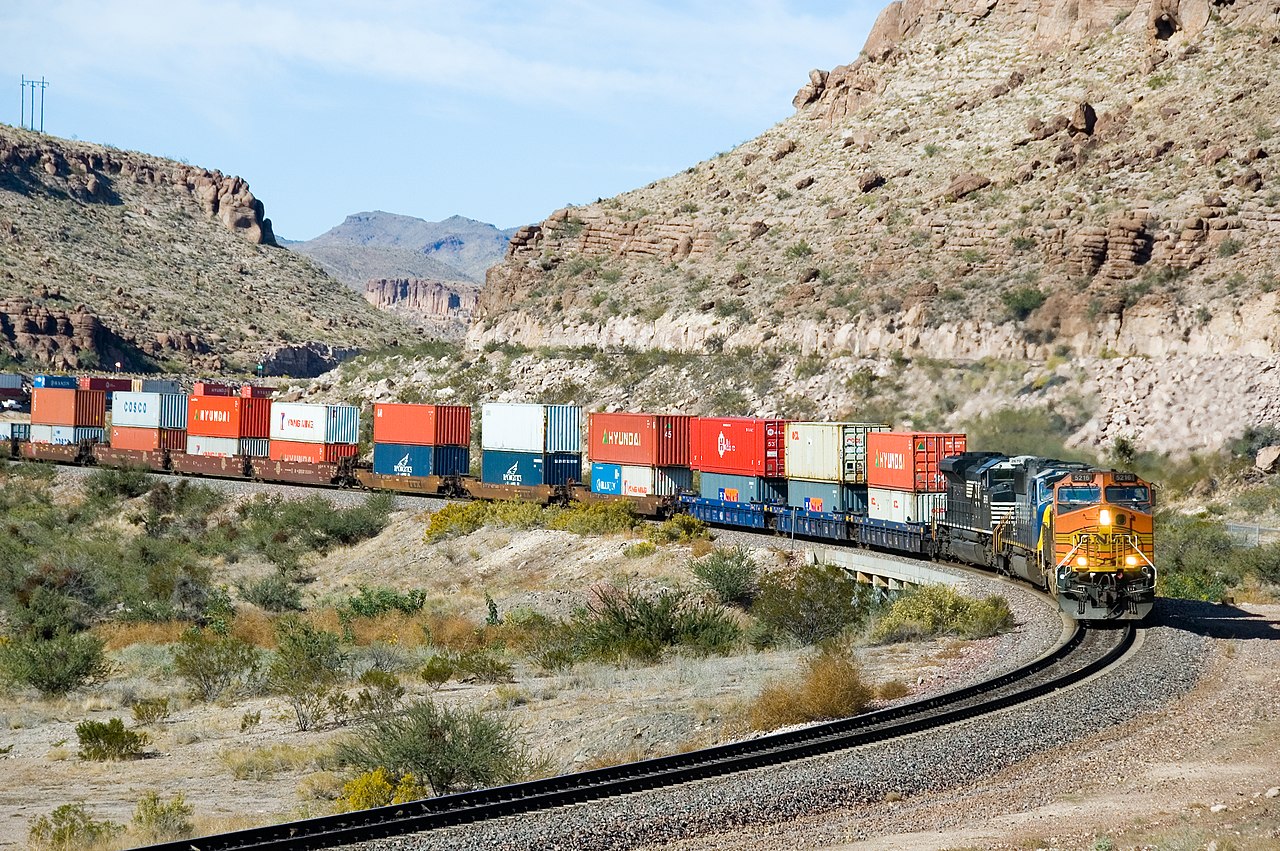
5. Trains have locomotives, and they run on steel wheels on steel rails — an efficient mode of transportation of goods and people. They’re efficient because of low friction between the wheels and rail. But that low friction is also a problem: a train has one or more locomotives and a bunch of wagons behind it. Though each wagon weighs only a few tons, the combined weight of the wagons it hauls ends up being 10,000 tons. Trouble is that a locomotive can only haul 200 tons or so from a dead stop — any more and the wheels of the locomotive slip (remember that friction is very low.) Question: how on earth can locomotives pull trains that weigh 10,000 tons? (All numbers are made up and do not alter the argument when accurate numbers are used.)
That’s about it for now. Prizes for answers; fabulous prizes for correct answers. Consolation prize: a video of every kind of rail cars. I love watching Practical Engineering videos.
Be well, do good work and keep in touch.

 Atanu Dey : Life is a Random Draw