
Humans, I tell you dear fellow human, are unique. Here’s a quick reminder on our zoological classification.
At the most specific classification — the species level at the bottom of the zoological taxonomic tree — we are homo sapiens, the modern humans. One level up from our species is the genus. We are in the genus homo. We are the only species in that genus.
Go up one level, we belong to the family hominidea. Our family includes chimpanzees, gorillas, and orangutans — the other great apes. We can detect the family resemblance. Apes have large brains and are bipedal.
Apes like us belong to the order primates. Besides us humans, the primate order includes apes, monkeys, and lemurs — animals that have a large brain, and they use their hands to manipulate objects. There are over 500 species of primates in the world.
One level up from order is class. Our class is mammalia. Mammals are animals that have hair or fur, and they give birth to live young. Move up one level and we belong to the phylum chordata. Chordates are animals that have a backbone, and humans are one of the few animals that have a fully developed backbone. The highest level of classification is the kingdom, and humans are classified in the kingdom animalia.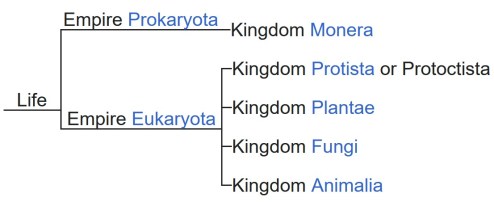 Homo sapiens is the only species of human that is still alive today. There were others like the species neandertals but they went extinct. That’s not surprising since an estimated 99.99% of all species have gone the way of the dodo. Our ability to communicate using language, reason, and create complex societies are some of the features that make us unique. Lucky us.
 That’s the end of the brief lesson in zoological taxonomy. It took me a while to memorize the sequence and even now I have to look it up to remind myself that it goes top down thus: kingdom —> phylum —> class —> order —> family —> genus —> species.
Surprise quiz: what order do we belong to? If you answered hominidae, you pass.
A couple of examples are in order. Take our favorite fish from Jaws. Its binomial name is carcharodon carcharias. It is classified thusly—
Kingdom: Animalia
Phylum: Chordata
Class: Chondrichthyes
Order: Lamniformes
Family: Lamnidae
Genus: Carcharodon
Species: C. carcharias
 Now let’s do my favorite fungi, shiitake mushrooms. It’s binomial name is lentinula edodes. Here’s the tree beginning with kingdom and ending in species: fungi, basidiomycota, agaricomycetes, agaricales, omphalotaceae, lentinula, L. edodes. Relax, this will not be in the test.
All the preceding is fairly useless knowledge. You don’t have to carry it in your head. If needed (which is indeed rarely) you can just look it up on the web. Call me weird but I like to learn seemingly useless things.
For example, I like to use the spelling alphabet created by the International Civil Aviation Organization (ICAO) when spelling out a word over an audio channel. It is used by air traffic controllers and pilots around the world regardless of language. The ICAO alphabet is used to avoid mistakes. M and N, B and D are easily misheard. I learned it years ago during my flying lessons. I would say, “November Two Niner One Whiskey India” to convey the tail number of the plane N291WI. Note that 9 is pronounced “niner” — because otherwise it would sound like “no” in German. Say “Whiskey Tango Foxtrot” instead of WTF.
Learn it. This will be on the test. Repeat after me, “alpha bravo charlie delta echo foxtrot golf hotel india juliet kilo lima mike november oscar papa quebec romeo sierra tango uniform victor whiskey x-ray yankee zulu.” I spell my name over voice as “alpha tango alpha november uniform.” Special note: quebec is pronounced “kee-bek”.
***
Alright, now to the main topic — diversity. Life on earth is impossibly varied. A blue whale is quite a different beast from a hummingbird even though they belong to the same tree of life. A blue whale (137,000 kgs) is 65 million times more massive than a hummingbird (0.002 kgs).
The diversity I am thinking about is within our species homo sapiens. You have seen one specimen of a particular species of whales or hummingbird, you have seen all the others. One common pigeon is indistinguishable from any other.
Wait a minute. I did write a blog about pigeons. I searched and found a Nov 2020 post: Wisdom, Genius, Knowledge and Intelligence. It’s pretty good, even if I say so myself. Now some new thoughts.
Anatomically modern humans have been walking the earth for about 200 to 300 thousand years. An estimated 100 billion of us have been born — including the eight billion currently alive. We have created immense wealth. Before we showed up, the world had zero wealth. Even as recently as 10,000 years ago, there was hardly any wealth at all. Then we invented technology, and with it came an explosion of wealth.
We have to note that it wasn’t the masses of humanity that created the wealth. The creation of technology (defined as knowledge of how to do something) is primarily due to a very tiny fraction of the population. I would say around one in 10 million people advances technology; the rest of us are passive beneficiaries of the advances. Technology grows relentlessly.
It’s thanks to the diversity within our species that we are so successful in dominating all other life forms on earth. We have great mathematicians like Euclid and Ramanujan; great scientists like Bohr and Einstein; great musicians, novelists, et cetera.
Economists have understood for a couple of centuries the secret to our extraordinary success. We call it division of labor and specialization. As the stock of knowledge has grown, humans are forced to specialize. One is not just a physicist; one is a theoretical condensed matter physicist. One is not just a surgeon but one who specializes in cardiac surgery. There’s too much to learn for one person to know any particular domain of knowledge.
Marx said that in a future communist utopia, people would “hunt in the morning, fish in the afternoon, rear cattle in the evening, criticise after dinner…without ever becoming hunter, fisherman, shepherd or critic”. He was profoundly wrong (as he was in many other important aspects of society and human behavior).
We cannot be generalists any more than a person can be both a champion sumo wrestler and a champion tennis player. Trying to gain world-class proficiency in any domain requires a lifetime of effort and therefore rules out the possibility of excelling in other domains. The future of humanity and human prosperity depends on specialization. Without division of labor and specialization, we would be condemned to eke out an existence in a very primitive, subsistence economy.
***
Optimism about the Future
I am an incorrigible optimist. We optimists have been around for a very long time. Here’s Joseph Priestly writing in 1771:
” … knowledge, as Lord Bacon observes, being power, the human powers will, in fact, be enlarged; nature, including both its materials, and its laws, will be more at our command; men will make their situation in this world abundantly more easy and comfortable; they will probably prolong their existence in it, and will grow daily more happy, each in himself, and more able (and, I believe, more disposed) to communicate happiness to others. Thus, whatever was the beginning of this world, the end will be glorious and paradisaical, beyond what our imaginations can now conceive. Extravagant as some may suppose these views to be, I think I could show them to be fairly suggested by the true theory of human nature, and to arise from the natural course of human affairs. But, for the present, I wave this subject, the contemplation of which always makes me happy.”[1]
***
Knowledge
I seek knowledge. That’s as much a part of my basic nature as I am lazy and lack ambition. But the pursuit of knowledge is not a happy occupation. Lord Byron (George Gordon Noel Byron) wrote, “Sorrow is knowledge, those that know the most must mourn the deepest, the tree of knowledge is not the tree of life.”
The upside of seeking knowledge to advance one’s understanding of the world is that it leads one to unimagined optimism about the future of humanity.
***
Bonus quote
From Patanjali’s Yoga Sutras (“Method of Enlightenment,” ca. Second Century BCE.)
When you are inspired by some great purpose, some extraordinary project, all your thoughts break their bonds; Your mind transcends limitations, your consciousness expands in every direction, and you find yourself in a new, great and wonderful world. Dormant forces, faculties and talents become alive, and you discover yourself to be a greater person by far than you ever dreamed yourself to be.
***
Let’s listen to some music. It’s a Bengali song titled “oi bohailo timiro raati.” Sorry I don’t know the name of the singer.
Well, that’s it for now. Be well, do good work, and keep in touch.
NOTES:
[1] Joseph Priestly (1733-1804) “An Essay on the First Principles of Government, and on the Nature of Political, Civil, and Religious Liberty.” Priestly was the co-discoverer (together with Lavoisier) of oxygen.
When Joseph Priestley discovered oxygen in 1774, he answered age-old questions of why and how things burn. An Englishman by birth, Priestley was deeply involved in politics and religion, as well as science. When his vocal support for the American and French revolutions made remaining in his homeland dangerous, Priestley left England in 1794 and continued his work in America until his death.[Source: Joseph Priestley and the Discovery of Oxygen.]
I was happy to note this bit from the article on Priestly in the Britannica:
In An Essay on the First Principles of Government (1768), he argued that scientific progress and human perfectibility required freedom of speech, worship, and education. As a proponent of laissez-faire economics, developed by the Scottish philosopher Adam Smith, Priestley sought to limit the role of government and to evaluate its effectiveness solely in terms of the welfare of the individual.

 Atanu Dey : Life is a Random Draw
The diversity in us humans is wonderful. There are those that specialize and expand the limits of human knowledge; and there there are those of us who go wide and enjoy the beginnings of the romance with every new field of knowledge and move on before committing to that marriage. We need all kinds. It’s a wonderful world. It would be a drab place without the curious, lazy and unambitious.
LikeLike
Some basic facts:
1)Yes, species are different because:
a)We ain’t identical clones seeded by some superior ET aliens..
b)Evolution differs according to ‘environments’..
c)Seems people seldom ask:Why species can evolve ‘independently’?
Ans:Becos of spatial seperation(besides environmental difference).That’s why there’re ‘white’,’black’..races
2)Diversity decline
a)One important step of evolution is gaining mobility, ie contact/interaction between species.
The interaction pace/magnitude just explode after the industrial revolution and particularly
lately of infos tech advances.
Biodiversity is on the decline IMO.
b)(I realise it’s sensitve matter but)Human ethnic groups have been invading/migrating-to each
others.
(I suspect in a few decades, humans will all become cyborgs with plug&Play body parts/gender/’races’/’whatever..’)
3)Race mixing(of which I’m neither protagonist nor antagonist)..
a)like it or not, always happen, regardless it was “Kill all the men and rape all the women” tribal
warfares or murica mulatto procreation.’Mughal’ originated from mongols, right?
b)The pace of ‘race mixing’ is complicate matter and depends a lot on the relation between the
dominating and the vanquished groups or the structure of the ethnic/religious pyramid. Seems
Southern Europe and Russia are the best examples of steady race mixing. Here’s a good
example: Rachmaninoff was a famous Russian pianist/composer; He actually was of Tatar
ancestry. ‘Rachmaninoff’ originated from the arab muslim name ‘Rahman’
LikeLike