
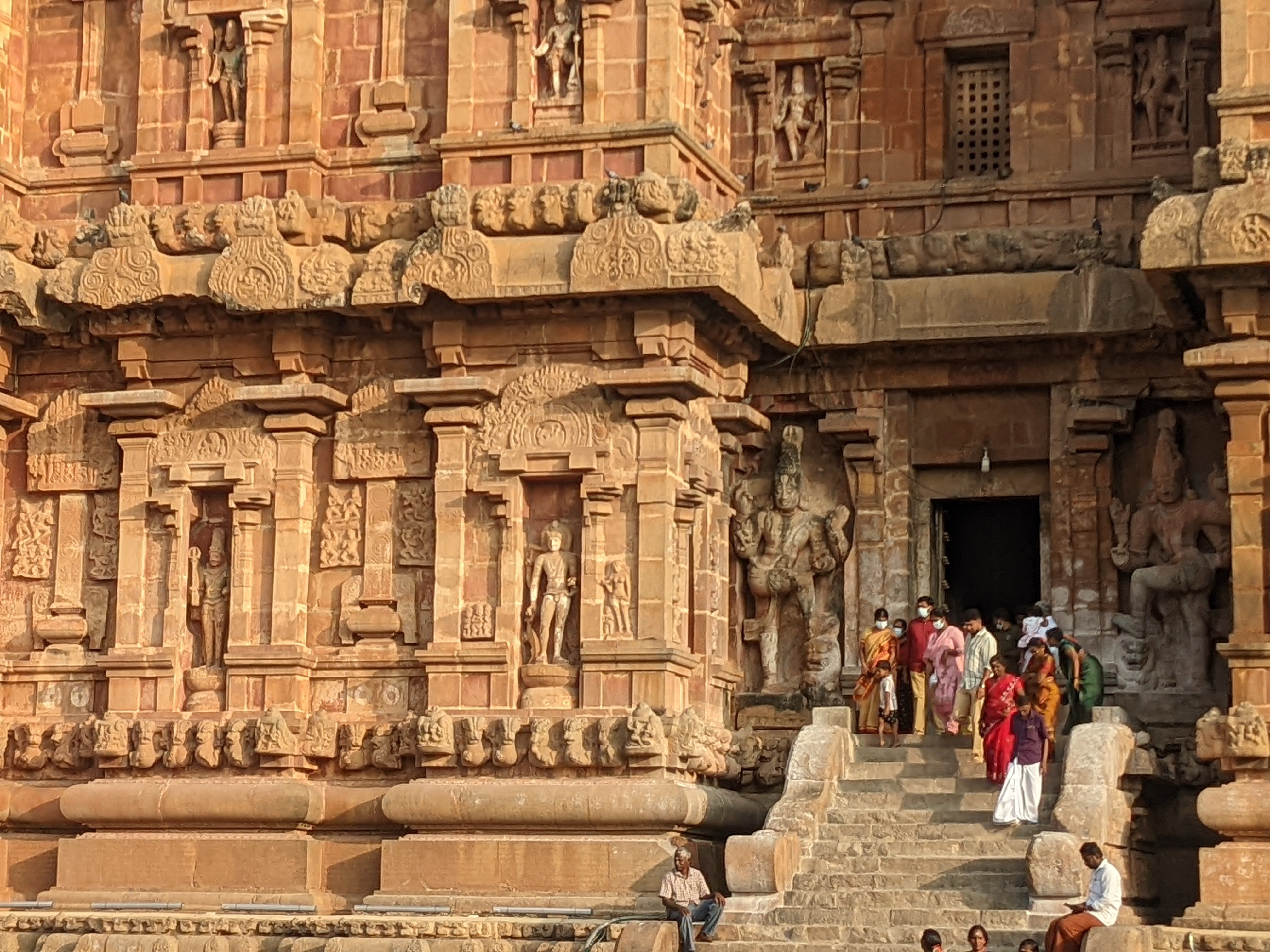
 The followers of the Abrahamic religions (Judaism, Christianity and Islam) routinely instruct their children in their religious texts and traditions. In contrast to that, children brought up in the dharmic traditions (Hindu, Buddha and Jain) are not taught the dharmas explicitly, not even the basics.
Whatever we learn is through a process of osmosis: gradual and unconscious assimilation of ideas that become increasingly more sophisticated and refined as one grows up. We don’t go to the equivalent of a Sunday school or a madrassa.
Hindus learn about dharma gradually. It begins with puja, the worship of various gods and goddesses at home, the occasional visit to a temple, and of course enthusiastic participation in the many dozens of festivals round the year. They are primarily cultural celebrations although they have a component of worship.
As children we are told stories, particularly from the two great Indian epics, the Ramayana and the Mahabharata. As we grow up, depending on individual interest, we learn more about them in bits and pieces. By the time we are young adults, we have a vague idea of our dharma but we are relaxed about it. We see nothing in it to get too agitated about. Our dharma is part of our lives but it doesn’t dominate every of our waking moments. Our attitude is to take it or leave it, but don’t get worked up about it.
Mind you, our dharma matters to us. But it neither dictates nor dominates. Some of the more philosophically inclined among us make the effort to understand the dharma. But philosophical inquiry comes only with maturity and adulthood. One needs to grow up and mature mentally before one begins to ask those questions the answers to which dharma is the guide. Questions such as what is the nature of the universe, who am I, what is the nature of consciousness, and so on. Dharma is merely a guide, not a dictator.
Not all of us are drawn to philosophy, of course; I am. Ever since my teenage years, I have had a deep interest in finding answers to the basic questions about existence. The physical sciences provide some answers but even while they explain a lot they are limited in their scope. The deeper questions of existence, meaning and significance are beyond their capacity to ask and answer.
I think the dharma has answers. My journey of self-discovery has been illuminated by “Advaita Vedanta.” I should hasten to add that the path I am on is not for everybody. It’s for me. As the disclaimer in the US says, “your mileage may vary.”
Vedas and Vedanta
The other day a friend asked me to explain what Vedanta is. Sure, I said. Then I took the easy way out. I have been watching a ton of YouTube videos that attempt to answer that precise question. I pointed my friend to a couple of them. Here they are.
But before that, a bit about the word “Vedanta.” The Sanskrit word véda meaning “knowledge, wisdom” is derived from the root vid – “to know.” The Vedas are the oldest sacred scriptures of dharma, consisting of four collections: Rigveda, Yajurveda, Samaveda, and Atharvaveda. They were composed roughly three thousand years ago.
Upanishads
Next come the Upanishads. These are exegetical texts, commentaries on the Vedas. Since the Upanishads are a sort of conclusion drawn from the Vedas, they constitute what is called Vedanta 0r “end or the final conclusion of the Vedas.” Anta means end. Therefore, Vedanta is the culmination of the Vedas.
So what is Advaita? Dvaita means two or dual; a-dvaita is its negation or non-dual. Therefore what we are concerned about here is non-dual Vedanta.
Alright, here’s a video that gets you started on the answer to the question “What is Vedanta.”
The video above is an appetizer, not the main course. The next video is the main attraction. It goes into the details. The first video is like the grad student teaching-assistant preparing the students for the main lecture by the professor. Swami Sarvapriyananda is the professor.
(Pronunciation guide: Sarva-priya-ananda. Sarva means all; priya means love; ananda – bliss.)
Swami Sarvapriyananda is a monk of the Ramakrishna order who is based in New York, New York. Sri Ramakrishna was the guru of Swami Vivekananda (1863 – 1902) who introduced Vedanta to Americans in the 1890s. More about Swami Vivekananda at the end of this post.
One side note. All monks of the Ramakrishna order receive a new name when they get ordained. As renunciates, together with giving up all possessions and titles, they give up their birth names as well. All names end with ananda. Swami Vivekananda’s birth name was Narendranath Dutta, a Bengali (like yours truly.) Swami Sarvapriyanand is also a Bengali.
(Trivia: Modi, the PM of India, was named after Swami Vivekananda. What a disaster.)
OK, listen to Swami-ji.
Thank you, good night and may your god go with you.
ABOUT SWAMI VIVEKANANDA
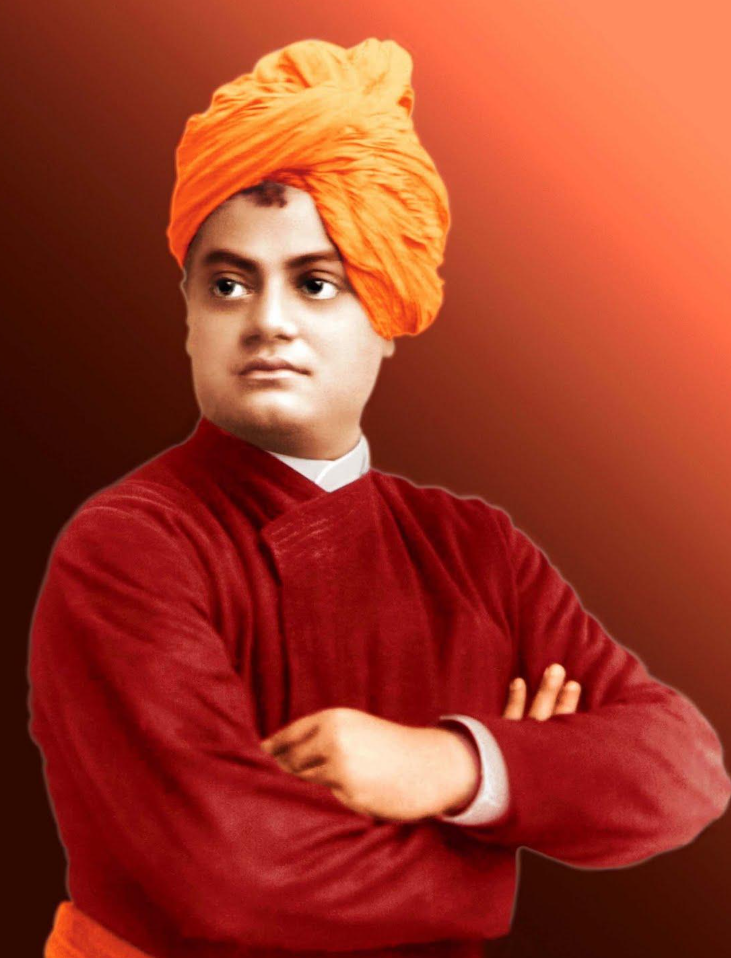 Swami Vivekananda (1863–1902), born Narendranath Datta in Kolkata, was a Hindu monk, philosopher, and the foremost disciple of the Sri Ramakrishna. He is the key figure of the Ramakrishna Order, which he founded to carry forward Sri Ramakrishna’s teachings.
He introduced Vedanta and Yoga to the West. He played a pivotal role in bringing Hindu philosophy (particularly Advaita Vedanta) and Indian spirituality to Western audiences, elevating Hinduism’s global recognition.
In 1893, he gave a speech at the World’s Parliament of Religions in Chicago. His opening address began with the famous words “Sisters and Brothers of America,” which received a prolonged standing ovation. In it, he emphasized religious tolerance, universal acceptance, and an end to fanaticism.
He founded the Ramakrishna Math and Ramakrishna Mission. In 1897, he established the monastic Ramakrishna Math (for spiritual training and renunciation) and the service-oriented Ramakrishna Mission.
He emphasized social reform and nationalism. His teachings emphasized inner strength and influenced India’s freedom movement.
Despite his short life (he passed away at age 39), Vivekananda’s dynamic personality, intellectual depth, and compassionate vision left a lasting legacy in spirituality and selfless service. He authored influential works on Raja-Yoga, Karma-Yoga, Bhakti-Yoga, and Jnana-Yoga.

 Atanu Dey : Life is a Random Draw